
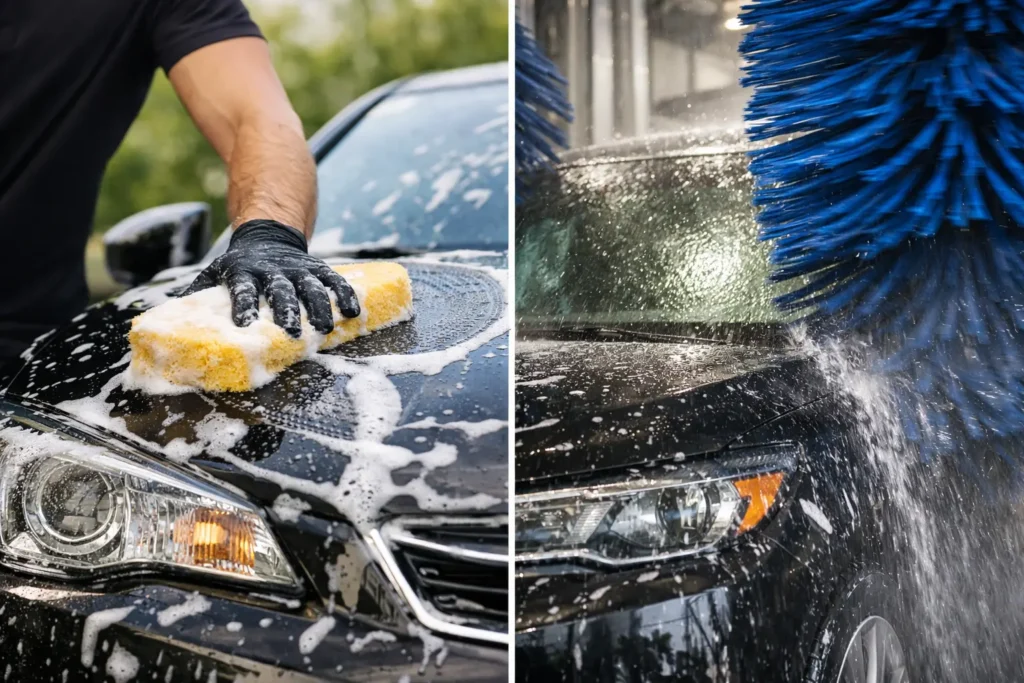
A quick automatic wash can look tempting when your car is dusty, the kids have left crumbs through the back seat, and your weekend is already full. But hand wash versus automatic wash is about far more than how quickly you can get water on the paint. It affects how your vehicle is handled, how clean it really becomes, and how well its exterior presentation is preserved over time.
For Sydney drivers who take pride in their car, SUV, ute or work vehicle, the better choice often comes down to what they value most: speed alone, or considered care with a consistently polished result. Both methods have a place, but they do not deliver the same experience.
Hand wash versus automatic wash: the real difference
An automatic wash is built for volume. You drive in, the machinery applies detergents and water, brushes or cloth strips move across the vehicle, and dryers complete the process within minutes. It is convenient, especially for a lightly soiled car when time is the only priority.
A professional hand wash is more deliberate. A trained team can inspect the paintwork, wheels, glass, trims and hard-to-reach areas before choosing the right approach. They can pre-rinse loose dirt, apply quality cleaning products, work carefully around badges and mirrors, and give attention to the areas automated equipment may miss.
That difference matters because dirt is not uniform. Road film, brake dust, tree sap, bird droppings and greasy fingerprints all need different levels of care. A manual wash allows the process to respond to the condition of your vehicle rather than treating every car exactly the same.
Paint safety is where hand care stands apart
The main concern with an automatic wash is contact with equipment that has cleaned many vehicles before yours. Even when brushes and soft cloth systems are regularly maintained, they can hold fine grit from previous cars. When that grit moves across paintwork, it may leave swirl marks or fine scratches.
These marks can be difficult to notice on a cloudy day. Under direct sunlight or petrol-station lighting, however, they can make an otherwise clean car look dull. Dark colours, black trims and newer paintwork often show them most clearly.
A quality hand wash reduces this risk through careful preparation. Removing loose contaminants before contact, using clean wash materials and working panel by panel are all practical steps that protect the finish. This is the foundation of 100% scratch-free hand car care: the vehicle is treated as an asset worth preserving, not simply the next car in a queue.
There is an important qualification. Not every hand wash is automatically paint-safe. Poor technique, unclean mitts or rushed work can still cause damage. The value lies in trained hands, premium products, clean equipment and a process designed around attention to detail.
Why pre-washing matters
A proper pre-wash is one of the less visible parts of vehicle care, but it has a significant effect on the final result. It helps loosen surface grime before a wash mitt touches the paint. That means there is less chance of dragging abrasive particles over the clear coat.
Automatic systems may include a pre-soak, but the timing and coverage are standardised. With hand washing, the team can spend more time on lower doors, wheel arches, bumpers and other areas that collect the heaviest road grime. For daily drivers travelling Sydney roads, this extra care makes a noticeable difference.
Cleaning quality: what each method can miss
Automatic washes are effective at removing loose dust and fresh dirt from broad, flat panels. They are less reliable around door jambs, wheels, number plates, mirrors, window edges and intricate grilles. These are often the areas that make a car look unfinished after a quick wash.
Hand washing allows for a closer inspection. Wheels can receive targeted cleaning to lift brake dust, glass can be finished without streaks, and exterior trims can be wiped with care. A professional can also spot marks that need further treatment rather than assuming a single machine cycle has solved them.
The same principle applies inside the vehicle. An automatic wash does nothing for sand in the carpets, coffee marks in the console, smudged screens or dust building up around vents. If the cabin needs a reset, an interior clean or mini detail provides far more value than an exterior-only drive-through service.
For a family SUV after a busy week, a rideshare vehicle between shifts or a commercial car representing your business, this level of presentation is practical as well as satisfying. A well-kept vehicle feels better to use and leaves a stronger impression on passengers, clients and potential buyers.
Time and convenience: automatic wash has an advantage
Automatic wash systems win on raw speed. If your only goal is to remove a light layer of dust in a few minutes, they are a straightforward option. For some drivers, particularly before a long trip or after a spell of dry weather, that convenience can be useful.
The trade-off is that the result is generally limited to what the machine can reach and what its fixed programme can deliver. You may also need to finish drying edges, mirrors and door openings yourself to avoid water spots and drips.
A hand wash takes longer because it is a considered service, not a one-size-fits-all cycle. Yet it can still fit neatly into a busy schedule when booked with a dependable local provider. Appointment-led care gives you certainty around timing, while the result saves you from feeling as though the car needs another clean a day later.
The right question is not simply, “Which wash is faster?” It is, “Which option gives my vehicle the result it needs today?” For regular maintenance, a premium hand wash offers a polished finish without the time commitment of a full detail. When the vehicle needs more intensive attention, deeper foam cleaning or a mini detail is the sensible next step.
Cost should be measured against the finish
Automatic washes can appear cheaper at the outset, particularly when bundled with fuel or offered as a subscription. But price alone does not tell the full story. If the wash leaves wheels dirty, glass streaky or paintwork marked over time, the apparent saving can lose its appeal.
Professional hand care is priced for the workmanship involved. At Premium Car Wash in Enfield, hand wash packages begin from $49, premium foam washes from $65 and mini detailing from $145. These options give vehicle owners a clear choice based on condition, desired finish and budget.
A regular hand wash is often a sound maintenance habit. By keeping grime, brake dust and contaminants from building up, you make each subsequent clean easier and help maintain the vehicle’s overall appearance. This is particularly worthwhile if you plan to sell, trade in or simply enjoy your car for years to come.
When an automatic wash may be enough
There is no need to pretend an automatic wash has no purpose. It can be enough when the vehicle has only light dust, the paintwork is not a major concern, and speed is genuinely the deciding factor. It may also suit an older runabout where a quick rinse is all that is required.
However, it is not the preferred choice after beach trips, heavy rain, country driving, roadworks or weeks of neglected cleaning. Those conditions leave more grime in places that machines struggle to address. They also call for safer contact methods if you want to avoid rubbing contamination into the paint.
Owners of newer vehicles, dark-coloured cars, prestige models and well-maintained family vehicles generally benefit most from a professional hand wash. The same is true for business vehicles, where a clean exterior and fresh cabin directly support a professional image.
Choose care that suits your vehicle
Your car works hard, whether it carries children to school, gets you across Sydney for work, transports equipment or provides a quiet moment between commitments. Washing it should do more than make it look acceptable from a distance. It should remove grime carefully, protect its presentation and give it the care it deserves.
For the occasional light rinse, an automatic wash may be adequate. For uncompromising quality, safer paint care and the satisfying finish of a vehicle that has been properly attended to, trained hand washing remains the better investment. Book the level of care your vehicle needs, then enjoy stepping back to see it looking clean, fresh and genuinely looked after.