
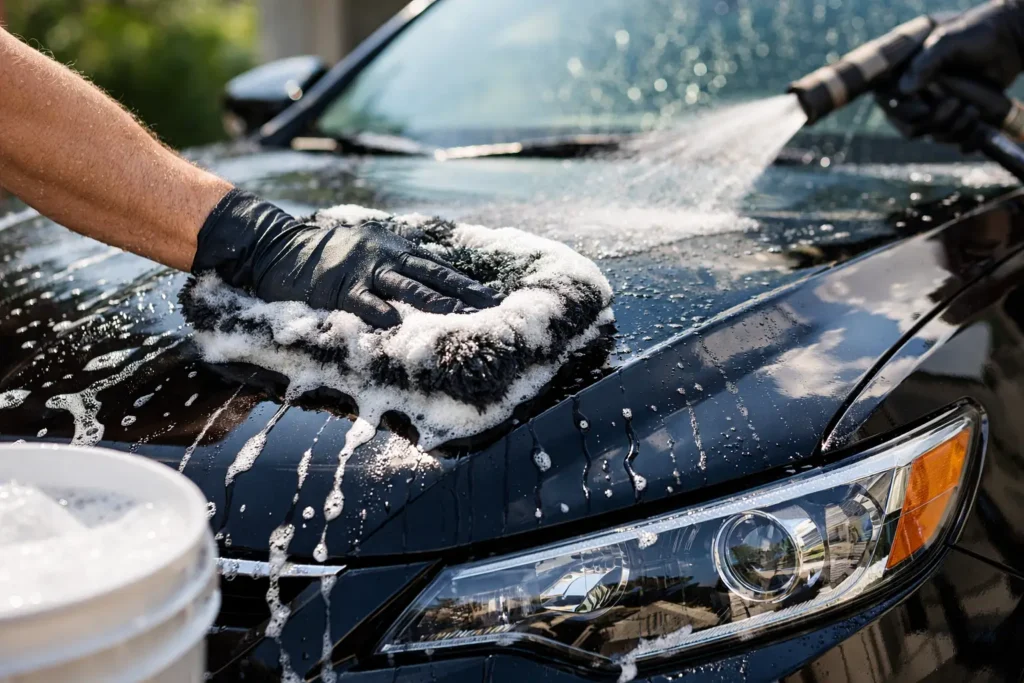
Black paint has a presence few other finishes can match. Freshly cleaned, it looks deep, glossy and unmistakably premium. Left with water spots, dusty panels or circular wash marks, though, it reveals every imperfection. Knowing how to wash black cars properly comes down to reducing friction, keeping contaminants away from the paint and drying the vehicle before mineral-rich water can mark the surface.
A quick automated wash or a single old sponge can leave black paint looking worse than before. A careful hand wash takes a little more time, but it protects the finish and delivers the clean, reflective result your vehicle deserves.
Why black cars need a different approach
Black paint is not necessarily softer than other colours, but it is far less forgiving visually. Fine scratches, often called swirl marks, catch the light and become obvious in direct Sydney sun, under car park lighting and even at night. These marks are usually created when dirt is dragged across the paint during washing or drying.
Dust, road film, brake dust and gritty particles sit on every vehicle. The goal is never to scrub them off dry. Instead, use plenty of water and quality wash solution to lift contamination away before your wash mitt touches the panel. This is the difference between a quick clean and premium paint-safe care.
Water spotting is another common challenge. When water dries on the vehicle, it can leave behind minerals that show clearly against a dark finish. Washing out of direct sunlight and drying promptly are two of the most effective ways to prevent it.
What to prepare before washing
Set yourself up before wetting the car. You will need a pH-neutral car wash shampoo, two clean buckets with grit guards if available, a soft microfibre wash mitt, separate wheel-cleaning tools, several clean drying towels and access to a gentle hose or pressure washer. A detailing spray or drying aid is optional, but useful for added gloss and easier towel movement.
Avoid household detergent, dishwashing liquid, stiff brushes and worn-out sponges. Dishwashing liquid can strip protective waxes or sealants, while a sponge tends to hold grit close to its flat surface. On black paint, that grit can create fine marks in a single pass.
It also helps to choose the right time. Early morning, late afternoon or a shaded wash bay is best. Never wash a hot bonnet or panels that have been sitting in full sun, as shampoo and water can dry before you have a chance to rinse them away.
How to wash black cars safely, step by step
Start with wheels, tyres and lower areas
Wheels and tyres collect the heaviest grime, so clean them first with dedicated brushes or microfibre tools. Do not use the same mitt, bucket or towel on wheels and bodywork. Brake dust and road grit are abrasive, and transferring them to the paint is an easy way to create scratches.
Work one wheel at a time. Rinse it thoroughly, use a wheel-safe cleaner if needed, agitate gently and rinse again. Clean the tyres and wheel arches last, then move on to the paintwork with fresh water and clean tools.
Rinse thoroughly before touching the paint
Give the whole vehicle a generous pre-rinse, working from the roof down. Pay extra attention to the lower doors, side skirts, front bumper, number plate area, mirrors and rear of the car. These areas often carry a layer of traffic film that needs to be loosened first.
If the vehicle is especially dirty after wet weather, a country drive or regular motorway use, a pre-wash foam can be worthwhile. Leave it on for the recommended time, without allowing it to dry, then rinse it away. Foam does not replace contact washing, but it reduces the amount of loose dirt your mitt needs to deal with.
Use the two-bucket method
Fill one bucket with clean water and the other with water and the correct amount of pH-neutral shampoo. After washing a small section, rinse the mitt thoroughly in the clean-water bucket before loading it with fresh shampoo again. This helps keep grit out of your wash solution.
Wash from the cleanest areas to the dirtiest: roof, glass, bonnet, upper doors and boot, followed by the lower panels. Use straight, overlapping passes rather than tight circles. Let the mitt glide over the lubricated surface with very light pressure. If you feel grit or resistance, stop, rinse the area and rewash it with plenty of solution.
For a family SUV, ute or commercial vehicle, work in manageable sections. Keeping each area wet makes the process safer and prevents shampoo residue from drying on black paint.
Rinse every section well
Once the contact wash is complete, rinse from top to bottom until no suds remain around badges, mirrors, door handles, fuel flap and panel gaps. These small areas can hold shampoo that later runs onto a freshly dried panel.
A gentle final rinse can help water sheet off the surface, particularly if the paint has quality protection. Less standing water means faster drying and fewer opportunities for water spots.
Dry without rubbing hard
Drying is where many black cars pick up visible marks. Use a large, clean, high-quality microfibre drying towel and place it lightly on the panel. Pat dry or draw the towel across the paint with minimal pressure. Do not use a chamois, bath towel or the same cloth used for wheels.
Start at the top and work down, changing to a fresh towel when one becomes saturated. Open doors, wipe the door shuts, dry mirrors and carefully blot around badges and trim. A light detailing spray can provide extra lubrication during drying, but only use it on a clean surface.
Protect the gloss between washes
A wash removes loose grime, but protection makes future maintenance easier. A quality wax, sealant or ceramic-style spray can improve water beading, reduce grime adhesion and give black paint a richer appearance. The best choice depends on how much time you have, your parking conditions and the level of finish you want.
For a daily driver parked outdoors, a simple spray protectant applied regularly may be practical. For a vehicle prepared for sale, an event or a special occasion, polishing and longer-lasting protection may be worth considering. Polishing can reduce existing swirl marks, but it is a corrective process rather than a routine wash step. Excessive polishing removes a small amount of clear coat, so it should be assessed and carried out carefully.
Between proper washes, avoid wiping dust from dry paint. Even a soft microfibre cloth can drag fine particles across the surface. If bird droppings, tree sap or bug residue land on the vehicle, remove them as soon as possible with suitable cleaner and a clean, damp microfibre cloth. These contaminants can stain or etch paint when left in heat.
Common mistakes that dull black paint
The biggest mistake is treating a black car like any other car. Running it through abrasive automatic brushes, washing with one bucket, using a dirty mitt or drying it in the sun may be quick, but the finish will eventually show the cost.
Another issue is over-washing. If the car only has light dust, a full wash may not always be necessary. Wait until you can wash it properly, or arrange professional hand care, rather than using a dry cloth for a fast clean-up. Likewise, if the paint already has widespread swirls, washing more aggressively will not restore the gloss. It needs considered paint correction followed by good maintenance habits.
For owners who want consistently clean black paint without the risk of rushed DIY washing, professional hand washing is a sensible option. At Premium Car Wash in Enfield, trained staff use 100% scratch-free hand car care principles, premium products and careful drying to give dark finishes the attention they demand.
Black paint rewards patience. Give it clean tools, generous lubrication, a gentle touch and prompt drying, and every wash becomes a chance to bring back that crisp, mirror-like shine.