
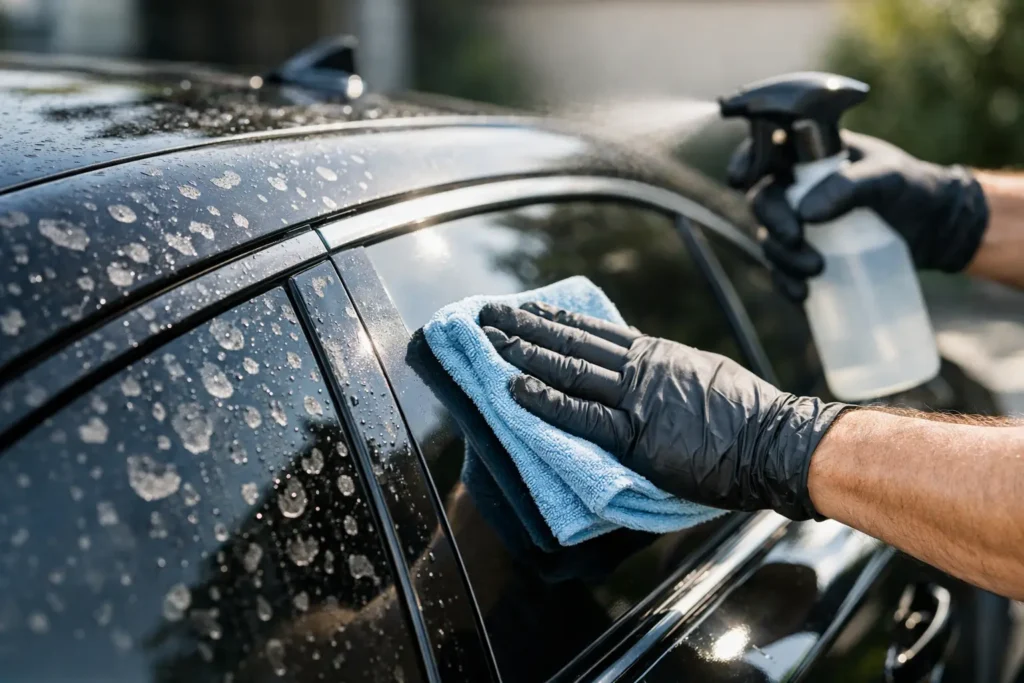
A freshly washed car can still look unfinished when cloudy rings or white specks catch the light across the bonnet, windows and mirrors. These marks are more than a cosmetic nuisance. Effective water spot removal protects the clean, polished appearance of your vehicle and can help prevent mineral deposits from becoming harder to correct over time.
Sydney vehicles deal with plenty of spot-making conditions: hard water from sprinklers, rain drying in the sun, coastal moisture, washing in warm weather and water left around mirrors or window trims. The sooner the marks are addressed with the right process, the better the result for your paintwork, glass and exterior trim.
What causes water spots on a car?
Water itself is not usually the problem. The issue is what remains after it evaporates. Tap water, bore water and sprinkler water can contain minerals such as calcium and magnesium. When droplets dry on the surface, those minerals stay behind as visible deposits.
At first, a water spot may sit on top of the paint or glass. This is often called a mineral deposit. It can usually be removed with a suitable, paint-safe treatment. Left in direct sun or on a hot panel, however, the deposits can bond more firmly to the surface. In more severe cases, they may leave etching – a faint outline or dull patch where the contamination has affected the clear coat or glass.
That distinction matters. A basic wash may lift fresh residue, while etched marks may need professional decontamination and careful machine polishing. Treating every mark as though it is the same can waste time and, worse, create unnecessary damage.
Why water spot removal needs a gentle approach
It is tempting to scrub a stubborn spot with a rough sponge, household cleaner or abrasive cloth. That may make the mark less obvious for a moment, but it can introduce fine scratches, haze glass or dull plastic trim. Dark paint, black gloss trims and windscreen glass are especially unforgiving under harsh cleaning.
The right approach begins with clean, lubricated surfaces and products chosen for automotive finishes. A professional detailer will assess whether the mark is sitting on the surface or has already etched into it, then use the least aggressive method that will achieve a clear result. This protects the finish while restoring the shine you expect from premium care.
There is also a practical safety point. Water spots on the windscreen, side windows and mirrors can create glare, particularly during early morning or late afternoon driving. Clear glass is not only about presentation – it supports better visibility on the road.
Safe water spot removal for paint, glass and trim
The process should always start with a proper hand wash. Dust and grit need to be safely removed before any spot treatment begins. Rubbing a cleaner straight onto a dirty panel risks dragging contamination across the paintwork.
Once the vehicle is clean, the affected areas can be inspected in good lighting. Fresh deposits may respond to a dedicated water spot remover or a carefully selected mild acidic cleaner applied according to the product directions. The product should not be allowed to dry on the surface, and it should be rinsed thoroughly. Working one small section at a time gives far more control than treating the entire car at once.
Glass can often tolerate a more targeted treatment than paint, but it still requires care. Mineral build-up around lower window edges and side mirrors can be persistent, especially where sprinklers regularly hit the car. A technician may use a glass-specific cleaner or polish to restore clarity without leaving haze.
Paintwork is more variable. If the deposits remain after safe chemical treatment, a light polish may be needed to refine the clear coat. This is where experience matters. The aim is to correct only what is necessary, preserving as much of the vehicle’s original finish as possible. Plastic trims, badges and rubber seals need their own suitable products, as strong cleaners can stain or dry them out.
When a wash is enough – and when detailing is the better choice
A regular maintenance wash is often enough for new, light water spotting. If the vehicle has been parked near a sprinkler once, caught in a shower and dried quickly, or has a few marks after washing, prompt attention may prevent the problem from progressing.
Professional detailing is the better choice when spots have been there for weeks, appear dull or etched, cover large areas, or have not improved after careful washing. It is also worthwhile before selling a vehicle, preparing for an event or refreshing a work car that represents your business every day.
For daily drivers, family SUVs and commercial vehicles, the condition of the paint should guide the service rather than a one-size-fits-all solution. A Premium Deluxe Hand Car Wash, with prices starting from $49, is a strong maintenance option for vehicles that need a careful clean. More persistent exterior contamination or neglected finishes may be better suited to a Premium Foam Wash from $65 or a Premium Mini Detail from $145, depending on the level of correction required.
At Premium Car Wash in Enfield, the focus is on 100% scratch-free hand car care, using trained manual cleaning and detailing techniques that respect the condition of each vehicle. Water spots are assessed as part of the overall finish, rather than simply covered with a quick shine product.
Avoid these common mistakes
The biggest mistake is leaving water to dry in the sun. A car washed at home on a warm day can develop marks before the job is finished, particularly on the bonnet, roof and glass. Wash in a shaded area where possible, work in sections and dry promptly with clean, high-quality microfibre towels.
Avoid using household vinegar, bathroom cleaners, dishwashing liquid or scouring pads on vehicle surfaces. Some online advice promotes these shortcuts, but their strength and suitability can vary. They may strip protective products, affect trim or create fine marks that are more noticeable than the original water spots.
It is also best not to keep rubbing at a stubborn mark. If a spot does not shift with a gentle wash and a vehicle-specific product, it may be etched. More pressure is not the answer. A professional inspection can determine whether decontamination, glass polishing or paint correction is appropriate.
Keeping water spots from coming back
Prevention is simpler and more affordable than repeated correction. Where possible, avoid parking beside active sprinklers and move the vehicle away from overspray as soon as you notice it. If rainwater or sprinkler water has dried on the car, a gentle rinse and proper hand wash soon afterwards can stop deposits from settling in.
Regular washing also gives the paintwork a better chance of staying clear and glossy. Protective products can make it easier for water and contaminants to release during future washes, although no protection makes a vehicle completely immune to mineral spotting. Cars parked outdoors, driven daily or regularly exposed to sprinklers may need more frequent maintenance than a weekend vehicle kept under cover.
After every wash, dry the vehicle carefully around mirrors, door handles, grille openings, badges and window rubbers. These areas hold water and can drip mineral residue down otherwise clean panels later in the day.
A clean car should look consistently clean from every angle, not only from a distance. Addressing water spots early, with the care your vehicle deserves, keeps the paint, glass and trim looking sharper for longer – and makes every drive feel that little bit more refined.