
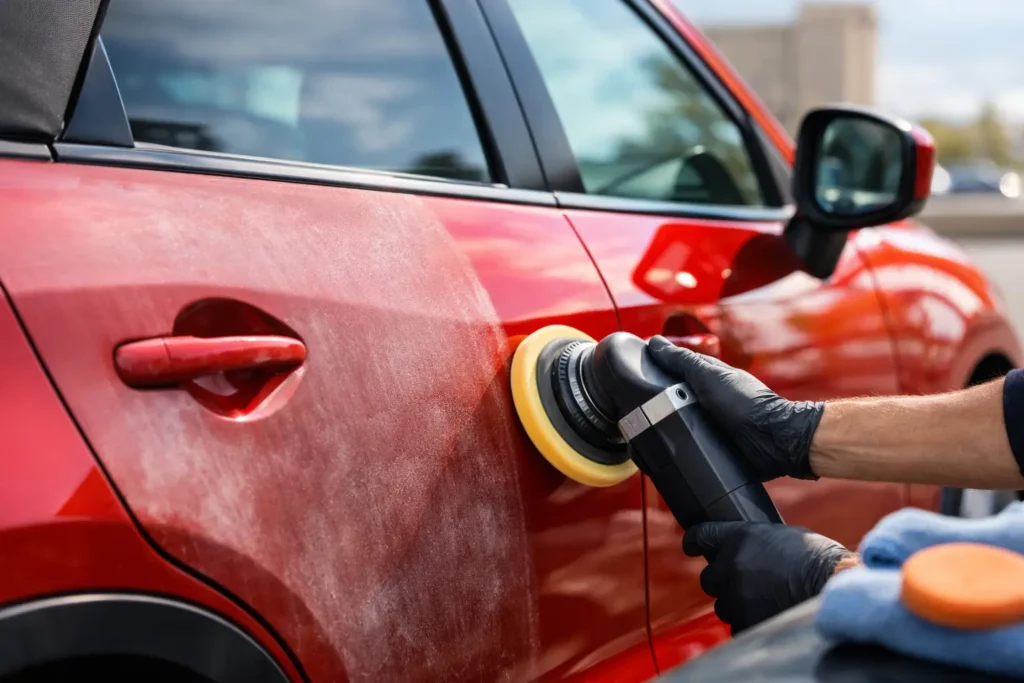
That chalky, flat finish on your bonnet or roof is more than ordinary dirt. Oxidised paint restoration can bring back depth, gloss and a well-kept appearance, but the right approach depends on how far the damage has progressed. For Sydney vehicles exposed to strong sun, heat, road grime and inconsistent washing, acting early can make a genuine difference to both presentation and long-term paint condition.
What oxidised paint looks like
Vehicle paint is protected by a clear coat, the transparent outer layer that creates shine and gives coloured paint its depth. Over time, UV exposure breaks this layer down. The surface begins to lose its smoothness and reflective finish, leaving paint that appears dull, faded, cloudy or powdery.
Oxidation is often most obvious on horizontal panels. The bonnet, roof and boot lid receive the most direct sunlight, so they usually fade before doors and lower panels. Dark colours may look grey or hazy; red paint can turn pinkish; black paint can lose its rich mirror-like finish.
It is easy to mistake oxidation for a dirty car. A wash will remove surface dust and traffic film, but it will not restore clarity to a compromised clear coat. If the vehicle looks clean but still lacks gloss, or water no longer beads evenly across the paint, professional assessment is worthwhile.
Why paint oxidation happens
Sun exposure is the main culprit, particularly in Australia. UV rays gradually degrade paint protection, while high panel temperatures accelerate the process. Parking outside every day, especially without shade, places more pressure on the clear coat than most owners realise.
Other factors add to the wear. Salt spray, tree sap, bird droppings, industrial fallout and neglected road grime can etch or contaminate the paint if left in place. Harsh chemicals, abrasive brushes and poorly maintained automatic car washes may also leave fine scratching that makes faded paint look worse.
Regular cleaning helps, but technique matters. Dirt should be lifted safely from the surface rather than dragged across it. A careful hand wash, quality products and clean equipment reduce the avoidable damage that can dull a vehicle between details.
Oxidised paint restoration starts with an honest assessment
Not every faded panel needs repainting. In many cases, oxidation sits within the uppermost part of the clear coat and can be corrected through a controlled machine polish. This removes a very fine layer of damaged material to reveal clearer, healthier paint beneath.
However, polishing is not a cure for clear coat failure. If the paint is peeling, flaking, cracking, heavily blistered or missing clear coat altogether, there may be too little sound material left to polish safely. Repainting is generally the proper solution at that stage.
A quality inspection also checks for deeper scratches, stone chips, previous repair work and paint thickness variations. These details matter because every vehicle has a different history. A newer daily driver with mild haze may respond beautifully to a single-stage polish, while an older car with neglected paint may need a more measured approach to protect what remains.
The professional restoration process
A proper restoration is not simply applying a shiny dressing over faded paint. Temporary gloss products can make a vehicle look better for a short time, but they do not remove oxidation or correct the surface. Lasting visual improvement starts with preparation.
Safe wash and decontamination
The vehicle is first washed thoroughly to remove loose dirt, grime and residues. This is essential before polishing because trapped contamination can cause unnecessary scratching. Stubborn bonded particles are then addressed so the paint feels smooth and is ready for correction.
Hand washing is particularly valuable at this stage. It allows close attention around trims, badges, door handles and panel edges, where build-up often hides. For owners who value 100% scratch-free hand car care, careful preparation is part of giving the paint the care it deserves.
Paint correction and polishing
A professional detailer selects the polishing combination based on the condition of the paint. Mild oxidation may only require a refining polish to improve clarity and gloss. More pronounced dullness can call for a stronger correction stage before the paint is refined again for a cleaner finish.
The aim is not to chase perfection at any cost. Paint correction removes material, so responsible work balances visible improvement with paint preservation. On a well-used family SUV, work vehicle or older daily driver, removing the majority of haze and restoring an even gloss can be a far better outcome than aggressively chasing every mark.
Edges, raised body lines and previously repaired sections require extra caution. These areas can have less paint available for correction, which is why trained hands and suitable equipment matter.
Protection for the restored finish
Once the paint is polished, it needs protection. A quality sealant, wax or ceramic-style coating helps reduce the impact of UV, water spots, contaminants and everyday grime. The best choice depends on how the car is used, where it is parked and how regularly it will be maintained.
Protection is not permanent, even when a product promises extended durability. It still benefits from gentle washing, prompt removal of bird droppings and periodic professional care. Think of it as a protective layer that makes ongoing maintenance easier, rather than a reason to stop maintaining the paint.
What results can you expect?
Successful restoration usually makes the colour look richer, reflections sharper and panels more even from one angle to the next. White and silver vehicles often regain a crisp, clean appearance, while darker colours can recover striking depth and gloss.
The outcome depends on the starting point. Light oxidation can show a dramatic improvement after one careful correction service. Severe fading may improve significantly without becoming factory-new, particularly if the clear coat has thinned over many years. A reputable provider should explain this before work begins rather than promising a result the paint cannot safely deliver.
It is also worth separating oxidation from scratches. Polishing can reduce many light swirl marks and wash-induced scratches, but deep marks that catch a fingernail may remain visible. Chips, dents and peeling paint need specialist repair rather than further polishing.
How to keep restored paint looking its best
The most effective maintenance routine is simple and consistent. Wash the vehicle before dirt becomes heavily bonded, use paint-safe products and avoid stiff brushes or dirty wash mitts. Drying matters too, as mineral-rich water left on hot paint can leave spots that affect the finish.
Where practical, park under cover or use a car cover when the vehicle will sit outdoors for extended periods. Shade reduces UV exposure, but be mindful of trees that drop sap, pollen or bird mess. If contaminants land on the paint, remove them as soon as possible with a suitable cleaner rather than rubbing them dry.
For vehicles that spend long days on Sydney roads, regular professional maintenance is a sensible investment. It keeps contaminants under control, preserves the protection layer and helps identify fading before it becomes expensive to address.
When to book a professional paint assessment
Consider an assessment if your car remains dull after washing, has patchy fading across the roof or bonnet, or no longer looks presentable for work, family use or sale. It can also be worthwhile before a special event or listing the vehicle, as paint condition strongly influences first impressions.
Premium Car Wash in Enfield can assess whether polishing is the right path and provide premium hand care suited to the condition of your vehicle. The goal is not a quick cover-up, but a cleaner, glossier finish achieved with uncompromising quality and sensible paint preservation.
A restored finish deserves ongoing care. Address the dullness while the clear coat is still recoverable, then maintain it with the same attention you expect from the rest of your vehicle.