
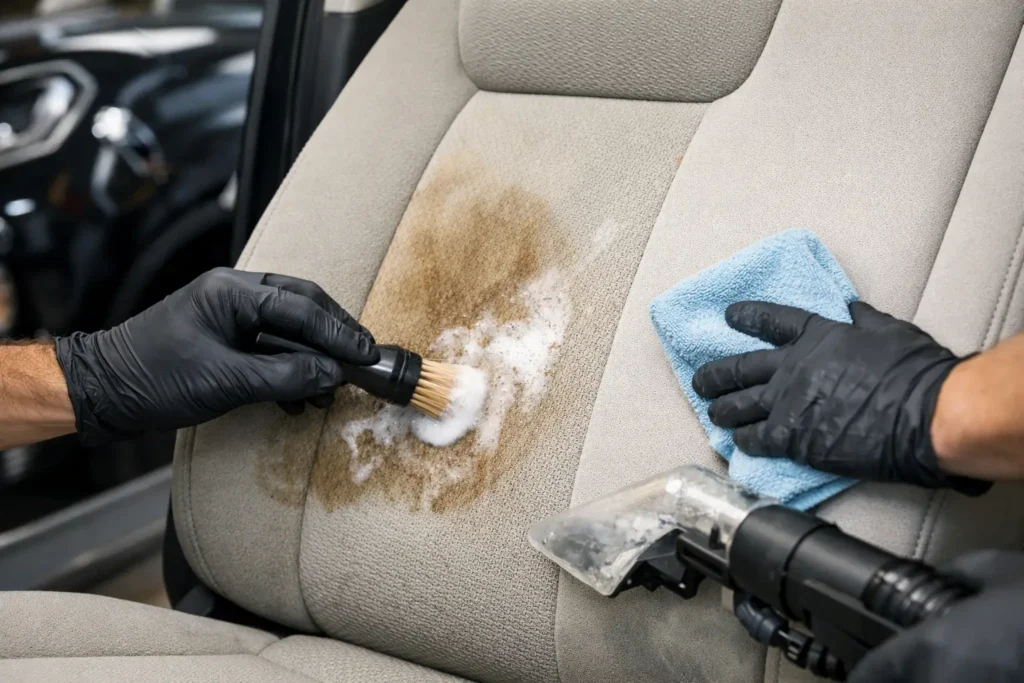
A coffee spill on the driver’s seat, muddy marks in the rear carpet or bird droppings baked onto the bonnet can make an otherwise well-kept car feel tired fast. So, can detailing remove stains? In many cases, yes. Professional detailing can dramatically reduce or fully remove common stains from upholstery, carpets, trims, glass and exterior surfaces. The result depends on what caused the stain, how long it has been there and which material it has affected.
A quality detail is more than a quick vacuum and wipe-down. It is a careful cleaning process that targets the source of the mark while treating each surface with the appropriate product and technique. That matters because a leather seat, fabric carpet and painted panel all need very different care.
Can Detailing Remove Stains From Car Interiors?
Interior stains are among the most common reasons Sydney vehicle owners book a detail. Daily drivers, family SUVs, work vehicles and rideshare cars all pick up their share of food spills, dirty shoes, pet hair, sunscreen, makeup and drink marks. Left untreated, those stains can become harder to lift and may leave behind unpleasant odours.
Professional interior detailing starts by assessing the fabric or finish rather than applying one harsh cleaner to everything. Carpets and cloth seats can usually be vacuumed thoroughly, pre-treated and shampooed or extracted to draw embedded soil from the fibres. Door trims, consoles and hard surfaces are cleaned more gently, while leather requires pH-appropriate products that clean without drying or damaging the finish.
Fresh stains generally respond best. A recently spilled soft drink or coffee may lift completely with the right treatment. Older stains can still improve significantly, but they may have dyed the fibres or left residue beneath the visible surface. In these cases, honest detailing means aiming for the best safe result, not overpromising a perfect outcome at the expense of the material.
Fabric seats and carpets
Fabric is absorbent, which is why spills can travel deeper than they first appear. A visible mark on a seat may also be sitting in the foam underneath, and a muddy carpet can hold fine grit long after it looks dry. A proper detail works through these layers carefully, helping restore the original colour and feel of the material.
Common interior stains that often respond well include food and drink spills, mud, light grease, salt marks, everyday grime and marks from children’s snacks or school bags. Pet accidents, milk, vomit and other organic stains are more complex because cleaning the visible area alone may not remove the odour. These situations often need specialised treatment, and prompt attention makes a real difference.
Leather, vinyl and delicate trims
Leather does not usually stain in the same way as cloth, but it can absorb oils, dye transfer and grime. Denim dye on pale leather, sunscreen on armrests and darkened driver’s bolsters are common examples. Professional cleaning can often improve these areas substantially, followed by conditioning or protection to maintain a supple, even appearance.
However, cracked, worn or heavily discoloured leather is not simply a cleaning issue. Once the colour coating itself has worn away, repair or recolouring may be needed. The same applies to damaged plastic trims and headliners. A careful detail can clean them, but it cannot reverse physical wear.
Exterior Stains Need a Different Approach
Not every exterior mark is a stain. Some are contaminants sitting on top of the paint, while others have etched into the clear coat or caused permanent damage. Knowing the difference is what helps protect your vehicle’s finish.
Bird droppings, tree sap, insect residue, hard-water spots, road grime and brake dust can often be safely removed through a thorough hand wash and decontamination process. These contaminants should not be scrubbed dry or attacked with an abrasive household cleaner. That can create scratches, dull patches or swirl marks that are more noticeable than the original stain.
At Premium Car Wash, our 100% scratch-free hand car care approach is designed to remove accumulated grime with premium products, modern equipment and close attention to the condition of each vehicle. It is a safer alternative to treating the paint as though every mark needs the same solution.
When polishing can help
If tree sap, bird droppings or water spots have remained on the vehicle for too long, they can etch the clear coat. The mark may still be visible even after the contaminant is removed because the surface beneath it has been affected. In suitable cases, professional polishing can refine the clear coat and reduce or remove the appearance of the damage.
Polishing is not always the answer. Paint is a finite surface, so it should be corrected thoughtfully rather than aggressively. Deep etching, stone chips, peeling clear coat and paint that has been burned or chemically damaged may require paint repair instead. A professional assessment sets realistic expectations before work begins.
What Detailing Can Usually Improve
Detailing is highly effective for surface contamination and everyday use marks. It can refresh a vehicle before sale, make a family car feel cleaner after a busy school term, or help a commercial vehicle maintain a more professional presentation.
Results are often strongest for these issues:
- Food, drink and mud marks on carpets and fabric seats
- General grime, body oils and light dye transfer on interior trims
- Dust, sand and embedded debris in crevices and floor areas
- Bird droppings, tree sap, insect residue and road film on exterior surfaces
- Light water spotting and dullness that responds to paint-safe cleaning or polishing
The key word is “usually”. Each vehicle has its own history. A one-week-old coffee spill is very different from a three-year-old mark that has been repeatedly rubbed with the wrong cleaner.
Stains That May Not Come Out Completely
Premium detailing delivers visible improvement, but there are limits. Being upfront about those limits is part of quality service. Some stains change the material itself rather than simply sitting on it.
Bleach marks, for example, remove colour from fabric. Burn marks melt or damage fibres. Ink, permanent marker and dark dyes can penetrate deeply, particularly in light-coloured upholstery. Rust stains may indicate corrosion beneath the surface, while mould can point to an underlying water leak that needs to be fixed before the interior is cleaned.
Odours can also be a separate issue. If water has entered the cabin through a damaged seal, blocked drain or leaking door, detailing can clean and freshen the affected area, but the source of moisture must be repaired. Otherwise, the smell and staining may return.
Why DIY Stain Removal Can Make Things Worse
It is tempting to use dishwashing liquid, supermarket stain spray or a stiff brush as soon as a spill happens. Blotting a fresh liquid spill with a clean microfibre cloth is sensible. Beyond that, caution is worthwhile.
Over-wetting seats and carpets can leave moisture trapped underneath. Strong chemicals can bleach fabric, strip leather finishes or discolour plastics. Scrubbing paint or glass with abrasive pads can create permanent scratching. Even seemingly harmless products can leave a sticky residue that attracts more dirt over time.
For a fresh spill, blot rather than rub, remove loose debris and avoid heat until the stain has been assessed. Take note of what caused it, especially if it was oil-based, dairy-based or dye-heavy. This information helps a detailing professional choose the right treatment quickly.
When Is the Best Time to Book a Detail?
The best time is soon after you notice a stain, particularly if it is food, drink, bird droppings, tree sap or anything with a strong odour. Quick action gives the product less time to bond with paint or sink into upholstery.
That said, older marks are still worth addressing. Even when full removal is not possible, a premium mini detail or more intensive cleaning service can improve the appearance, cleanliness and overall feel of your vehicle. It is often the difference between a car that feels neglected and one that feels looked after.
Regular hand washing and interior maintenance also help prevent stains from becoming a larger restoration job. For Enfield and inner-west Sydney drivers managing work, family life and weekend travel, this kind of upkeep protects both the presentation of the car and the comfort of everyone who uses it.
A stain does not have to become part of your vehicle’s story. Give it prompt, professional attention, and your car has the best chance of returning to the clean, fresh presentation and premium care it deserves.