
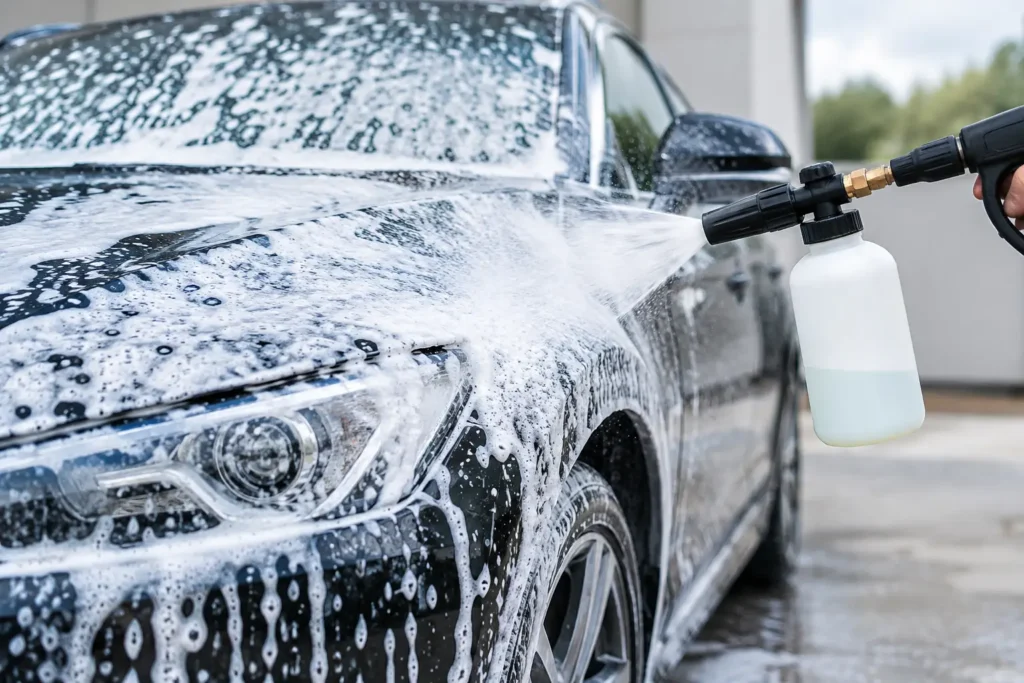
A gritty car after a week of Sydney traffic, rain and parked-under-a-tree debris should not be attacked with a sponge straight away. That is where foam wash earns its place. But is a foam wash safe for paintwork? Yes, when it is used correctly with quality products, clean equipment and a careful hand-washing process. Foam itself is not what damages clear coat. Poor technique is.
For owners who want their daily driver, family SUV or work vehicle to keep looking sharp, foam cleaning can be one of the safest ways to begin an exterior wash. It softens and lifts loose contamination before anyone touches the paint, reducing the chance of dragging abrasive dirt across the surface.
Is Foam Wash Safe for Paintwork?
A professional foam wash is designed as a pre-wash. A specialised cleaning solution is applied as thick foam over the vehicle, where it clings long enough to break down road film, dust, insect residue and everyday grime. It is then rinsed away before the main hand wash begins.
This matters because much of the dirt sitting on a car is abrasive. Fine sand, brake dust and road grime may look harmless, yet they can create light swirls and scratches when rubbed over paintwork. By removing as much loose contamination as possible without physical contact, foam gives the hand-wash stage a cleaner starting point.
The key word is professional. Not every foaming product is the same, and a foam cannon alone does not guarantee paint-safe results. The formula needs to suit automotive paint, be mixed at the right strength and be thoroughly rinsed. Just as importantly, the vehicle still needs to be washed with clean mitts, fresh water and a methodical approach after the foam has done its work.
What Actually Causes Scratches During a Wash?
It is easy to blame foam, water pressure or the wash itself when new marks appear in sunlight. In most cases, the cause is contamination combined with friction. A dirty wash mitt, an old sponge that has trapped grit, or a towel dropped on the ground can all carry particles straight onto the clear coat.
Automated brush washes are a common concern because their brushes are used on many vehicles throughout the day. Even when they appear clean, they can retain grit from wheels, heavily soiled four-wheel drives and vehicles that have travelled on unsealed roads. Repeated brush contact can leave fine circular swirls that dull the paint’s gloss over time.
Hand washing is not automatically safe either. A rushed hand wash with one bucket, one sponge and no pre-rinse can cause the same damage. Premium care comes down to process: loosen the grime first, use clean tools, keep wheel-cleaning equipment separate from paintwork equipment, and dry the car with quality microfiber towels rather than rubbing it with a rough chamois.
Foam Must Be Rinsed, Not Allowed to Bake On
Foam should be allowed to dwell for a short, controlled period, then rinsed before it dries. Leaving any cleaning product to dry on hot paint, glass or trim can lead to streaking, water spotting or residue. This is especially relevant during a hot Enfield afternoon, when panels can become warm quickly.
A skilled operator adjusts the process to the conditions. That may mean working panel by panel, using cooler water where appropriate, shortening dwell time or moving the vehicle into shade. Careful timing protects the finish just as much as the product choice.
The Safe Foam-Wash Process
A quality foam wash is not simply a layer of white suds for appearance. It is a staged cleaning process that reduces unnecessary contact with the vehicle.
First, the wheels, tyres and lower panels receive attention with dedicated tools. These areas collect the harshest road contamination and should never be cleaned with the same mitt or brush used on the bonnet and doors. The bodywork is then pre-rinsed to remove loose dust and mud.
Next comes the foam application. The solution covers the painted surfaces and begins loosening bonded traffic film. After sufficient dwell time, the foam and suspended grime are rinsed from top to bottom. Gravity helps carry contamination away from cleaner upper panels instead of spreading it back over them.
The final wash should use a pH-balanced car shampoo and clean, soft wash media. Rather than pressing hard, the operator lets lubrication and gentle passes do the work. Frequent rinsing of the mitt limits the chance of grit being carried from one panel to the next.
Drying deserves the same level of attention. Water left to evaporate can leave mineral spots, particularly on dark paintwork and glass. Plush microfiber drying towels, used with light pressure, absorb the water without aggressive rubbing. Door shuts, mirrors, grille openings and wheel faces may need a final wipe to prevent drips after the vehicle leaves.
When Foam Washing Needs Extra Care
Most modern factory paint systems respond very well to correctly applied foam cleaning. Still, some vehicles need a more tailored approach. Fresh paintwork, newly applied ceramic coatings, vinyl wraps, paint protection film and older vehicles with fragile finishes can have specific product and handling requirements.
Freshly painted panels should only be washed according to the advice provided by the repairer or painter. A new coating may need time to cure fully before detergents are used. For coated vehicles, the issue is usually not safety but performance. Strong alkaline cleaners or heavy degreasers can reduce water beading and leave the coating looking flat, so a coating-friendly wash routine is the better choice.
Classic cars and vehicles with fading clear coat also deserve a gentler touch. Foam will not repair oxidised paint or stop existing clear-coat failure, but a careful low-contact wash can avoid making a delicate finish worse. In these cases, inspect the paint before choosing stronger cleaning products or polishing services.
Does a Foam Wash Replace Detailing?
A foam wash keeps a well-maintained car clean and presentable, but it is not a substitute for paint correction, polishing or long-term protection. Foam removes surface grime. It does not remove swirl marks, deep scratches, oxidation, tar staining or embedded fallout that has bonded to the paint.
That distinction is useful when deciding what your vehicle needs. If the paint still feels smooth, reflects cleanly and simply looks dusty after normal use, regular foam washing is ideal maintenance. If it appears dull even after washing, feels rough to the touch or has visible swirl marks under direct light, a more comprehensive detailing service may be worthwhile.
Polishing can improve gloss by refining light defects, while protective treatments help make future washing easier. Neither should be seen as permission to use harsh washing methods afterwards. The condition of the paint is preserved through regular, gentle maintenance.
How Often Should You Foam Wash Your Car?
For many Sydney vehicles, a foam wash every two to four weeks is a sensible routine. Cars parked outdoors, driven daily through construction areas, used for rideshare work or regularly exposed to bird droppings may benefit from more frequent cleaning. Bird droppings, tree sap and insect residue should be removed promptly because they can mark paint if left sitting in heat.
There is no advantage in washing excessively if the car is only lightly dusty and the process is not being done carefully. A quality wash at sensible intervals is better for the vehicle than frequent quick cleans with dirty equipment. Between appointments, avoid wiping dry dust away with a cloth. It may seem convenient, but that is an easy way to introduce fine scratches.
Choosing Paint-Safe Car Care
When booking a wash, ask how the vehicle is pre-rinsed, whether foam is used before contact washing, and how wash tools are kept clean. Clear answers are a good sign that the service treats paintwork as more than a surface to get wet and shiny.
Premium Car Wash provides 100% scratch-free hand car care built around those details, from deep foam cleaning to careful drying and finishing. It is the kind of considered treatment that helps maintain the pride you take in your vehicle, whether it is a practical school-run SUV, a business vehicle or the car you reserve for weekends.
A clean car should look freshly cared for, not carry new wash marks into the sunlight. Choose a foam wash that respects the finish, and give your paintwork the care it deserves each time it is cleaned.