
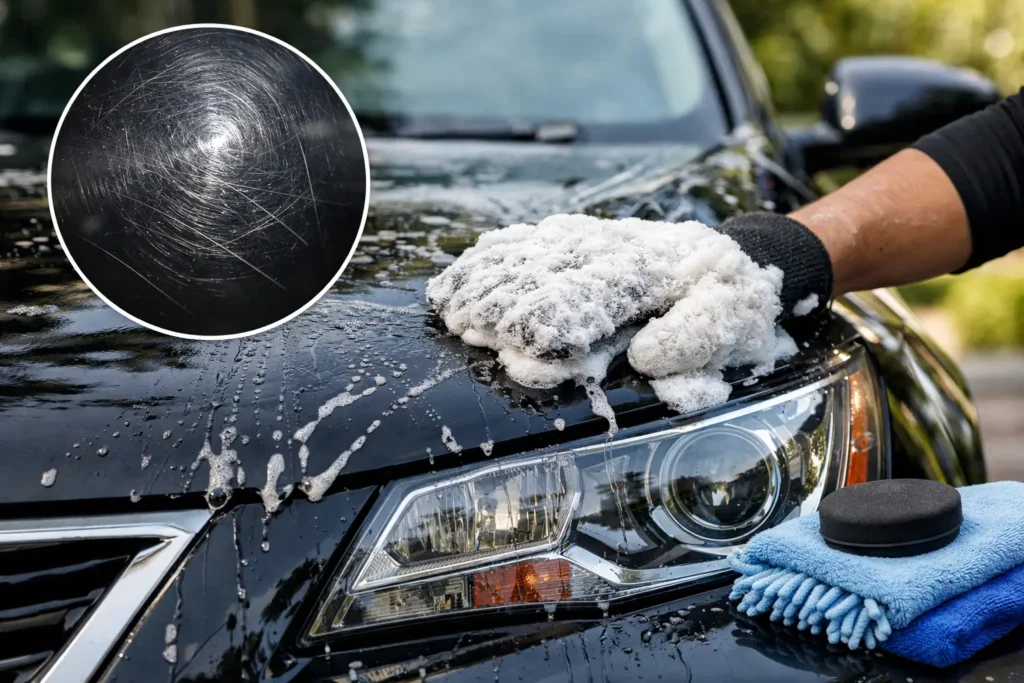
A clean car should leave the paint looking clearer and glossier, not covered in fresh swirl marks when the sun hits. Learning how to prevent wash scratches comes down to one simple principle: never drag dirt across the paint. Most wash scratches are not caused by water or shampoo. They happen when gritty particles are caught in a sponge, towel, wash mitt or drying cloth and then rubbed over the vehicle’s surface.
For Sydney vehicles dealing with road dust, tree sap, construction grime and regular stop-start traffic, paint-safe washing is practical maintenance. A careful routine protects the finish, keeps your car looking presentable, and helps preserve the visual condition that matters when it is time to sell or trade in.
Why wash scratches happen
Paint is protected by a clear top layer, but that layer is still vulnerable to abrasion. Fine scratches, often called wash marring or swirl marks, form when dirt is moved over the surface under pressure. They may be almost invisible in the shade, then stand out under direct sunlight, service-station lighting or a mobile torch.
The usual culprits are washing a dry, dusty vehicle; using one bucket for both clean water and rinsing; using old sponges; dropping a mitt and continuing to use it; and drying with a chamois or low-quality towel. Automated brush washes can also create marring because the brushes may hold dirt from previous vehicles.
Not every mark comes from washing. Parking-lot contact, poor wiping technique at a fuel bowser, dirty car covers and incorrect polishing can all affect paint. Still, changing the wash process is the most effective way to reduce the steady build-up of fine scratching.
How to prevent wash scratches before you touch the paint
The safest wash begins with preparation. Park in a cool, shaded spot where possible and let hot panels cool down first. Washing in direct sun can cause shampoo and water to dry too quickly, leaving residue that encourages extra wiping. It can also make it harder to see whether dirt has been fully removed.
Start with a thorough pre-rinse. Use a gentle but generous stream of water to flush loose dust, mud and grit from the roof, glass, bonnet, panels, wheel arches and lower doors. Do not rush this stage. If the vehicle has heavy mud or sandy grime, a pressure rinse from a safe distance is particularly useful because it removes contamination without physical contact.
A quality pre-wash foam can add another layer of protection. Applied to a wet vehicle and left briefly to dwell as directed, foam loosens traffic film and softens grime so less remains when the wash mitt reaches the paint. It is not a substitute for hand washing, but it reduces the amount of abrasive material you need to remove by hand.
Never use a household dishwashing liquid. It is not designed for automotive paint and can strip protective products, leaving the finish less slick and more likely to hold dirt. Choose a pH-balanced car shampoo with good lubrication. The slipperier the wash solution, the less friction occurs between your mitt and the surface.
Use clean tools and separate the dirty areas
A soft microfibre wash mitt is usually a safer choice than a sponge. A sponge has a flat surface that can trap grit against the paint, while a deep-pile mitt is better able to draw particles away from the surface. That does not make any mitt safe forever. It must be clean, rinsed frequently and replaced once it becomes worn or contaminated.
The two-bucket method is a straightforward habit with real benefits. Fill one bucket with shampoo solution and another with plain rinse water. After washing a small section, rinse the mitt thoroughly in the rinse bucket before returning it to the shampoo. A grit guard at the bottom of each bucket helps keep heavier particles away from the mitt.
Wheels, tyres, wheel arches and lower sills need their own brushes, mitts and towels. These areas collect brake dust, sand and road grime that are far more abrasive than light dust on the roof or doors. Using the same mitt on the wheels and paint is one of the quickest ways to introduce scratches.
If you drop a mitt or towel on the ground, set it aside. Even if it looks clean, it may have picked up grit that is impossible to see. Rinse it thoroughly before reuse, or reach for a fresh one. Keeping several clean microfibre towels on hand is less expensive than correcting paint later.
Wash in sections with light pressure
Work from the cleanest areas down to the dirtiest: roof, glass, upper panels, bonnet and boot first, then lower doors, bumpers and sills. Wash one panel or small section at a time, using straight, overlapping passes rather than firm circular scrubbing. Straight-line marks are generally less noticeable and easier to correct than tight circular swirls.
Let the shampoo, water and microfibre do the work. Pressing harder does not remove bonded contamination more effectively. It simply increases friction. If a mark will not lift with a gentle pass, rinse the area again, add more lubricated shampoo and reassess. Sap, bird droppings and bug residue may need a dedicated, paint-safe product rather than elbow grease.
Rinse each section before the shampoo dries. On a large SUV, ute or commercial vehicle, this may mean working in smaller sections, especially on warm days. There is no prize for finishing quickly if the final result involves dried residue and extra rubbing.
Drying is where good washes can go wrong
Many vehicles are washed carefully and then scratched during drying. Water left on paint can form spots, particularly in areas with mineral-rich water, but aggressive drying creates its own problem. The goal is to remove water with as little contact as possible.
First, use a gentle final rinse to sheet water off the panels. Then use a clean, plush microfibre drying towel. Lay it flat over a section and lightly drag or pat it dry rather than pressing down and rubbing. For larger vehicles, a dedicated vehicle air dryer or blower can safely remove water from mirrors, grilles, badges and panel gaps before towel drying.
Do not use old bath towels, paper towel, a silicone blade or the chamois that has been sitting damp in the boot. These materials can be harsh, contaminated or prone to dragging dirt. Drying towels should be washed separately from household laundry, using a suitable detergent without fabric softener. Fabric softener coats microfibre fibres and reduces their ability to absorb safely.
Add protection so dirt releases more easily
A protected surface is not scratch-proof, but it is easier to wash safely. Quality wax, sealant or ceramic protection creates a smoother barrier that helps water bead or sheet away and reduces how strongly grime clings to the paint. This means less effort is needed at the next wash.
The right option depends on how the vehicle is used. A daily family SUV parked outdoors may benefit from regular protective top-ups, while a weekend car stored under cover may prioritise depth of gloss. Ceramic coatings can offer longer-term benefits, but they still require correct washing. A coating cannot stop scratches caused by dirty tools or poor technique.
Between full washes, avoid dry wiping dust from the bonnet or doors. If you need to remove a fresh bird dropping, use plenty of water or a suitable quick-detail product and a clean microfibre towel. Pat and lift the contamination rather than grinding it into the paint.
When professional hand washing makes sense
A professional hand wash is useful when you do not have a suitable wash space, quality equipment or time to follow a paint-safe process. It is also a sensible choice after muddy trips, during busy work weeks, or before a sale, event or family occasion when presentation matters.
At Premium Car Wash in Enfield, trained staff use a careful hand-wash process designed for 100% scratch-free hand car care, with services suited to everyday maintenance through to more detailed presentation work. The key is consistency: clean tools, premium products, modern equipment and attention to each section of the vehicle. A low-cost brush wash may seem convenient, but avoiding even a small amount of repeated marring can make the higher-care option worthwhile.
Your car does not need complicated rituals to stay looking its best. It needs clean tools, plenty of lubrication, gentle technique and a little patience – the care it deserves every time the paint is touched.