
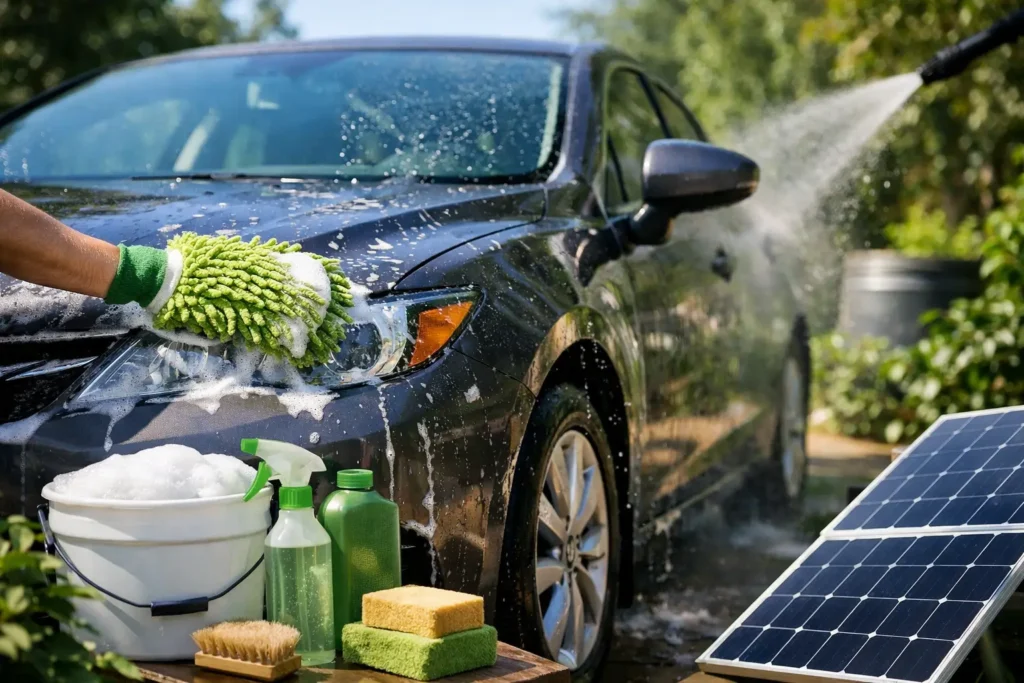
A clean car should not come at the expense of its paintwork, your local waterways or an afternoon spent fighting stubborn grime on the driveway. Eco friendly car washing is about making considered choices: using water efficiently, selecting suitable cleaning products and applying the right technique so the vehicle receives the care it deserves.
For Sydney drivers, that balance matters. Dust, tree sap, bird droppings, brake dust and coastal residue can quickly dull a vehicle’s presentation. Leaving them in place is not the greener option if it allows contaminants to damage surfaces and creates a bigger restoration job later. The aim is regular, paint-safe maintenance with less avoidable waste.
What eco friendly car washing really means
Eco friendly car washing is sometimes presented as a simple choice between a bucket at home and a professional service. In reality, the environmental impact depends on what happens to the water, how much is used, which chemicals enter the wash process and whether the job is done carefully enough to prevent damage.
A responsible wash does not mean using no water at all. Waterless products can be useful for very light dust, for example, but rubbing a heavily soiled car with too little lubrication can drag grit across the clear coat. That can leave fine scratches and reduce shine over time. For vehicles carrying road film, mud or brake dust, controlled rinsing and proper lubrication are generally the safer approach.
It also does not mean assuming every product labelled “green” is harmless. Product concentration, correct dilution and disposal all matter. A biodegradable wash solution may break down under the right conditions, but that does not make it appropriate to let dirty wash water run directly into a stormwater drain.
The best outcome is a wash that respects both the vehicle and the wash environment: measured water use, quality products, clean tools and thoughtful handling of runoff.
Why the wash method matters as much as the product
The biggest environmental benefit of careful car washing is often overlooked: protecting the vehicle so it stays in good condition for longer. Swirl marks, etched bird droppings, neglected wheels and embedded dirt can lead to more intensive polishing, replacement products and repeated corrective work. Prevention is usually kinder to the car and more efficient overall.
Automated brushes and dirty sponges can hold grit from previous vehicles. When that grit meets paintwork, it acts like a mild abrasive. A professional hand wash allows the cleaner to assess the vehicle panel by panel, use appropriate tools for different areas and replace or rinse wash media before it transfers contamination.
A proper approach also separates the dirtiest areas from the most delicate ones. Wheels, tyres and lower panels collect brake dust, sand and road grime. They should not be cleaned with the same mitt used across the bonnet, doors and roof. This is a small detail, but it protects the finish while helping products and water be used where they are genuinely needed.
For owners who value 100% scratch-free hand car care, technique is not an optional extra. It is the foundation of a premium result.
Water use: less is good, controlled is better
A hose left running across the driveway can use far more water than most people realise. It also sends detergent, oil residue, dirt and brake dust towards the gutter. During dry periods, or when water restrictions apply, home washing may be unsuitable or require specific precautions.
Professional wash facilities are generally better placed to manage water use through modern equipment, pressure-controlled rinsing and purpose-designed wash areas. The exact setup varies by operator, so it is reasonable to ask how water and runoff are managed. A quality provider should be comfortable explaining its process.
At home, a bucket-and-rinse method can be sensible for a lightly soiled vehicle where permitted, especially when paired with a trigger nozzle. The trade-off is that driveway washing makes it harder to control runoff and easier to introduce scratches if tools are not thoroughly clean. If the car has been through rain, construction dust, mud or a long motorway run, professional hand washing may be the more careful choice.
Small habits that make a meaningful difference
Vehicle owners do not need to chase perfection to reduce the impact of routine cleaning. A few practical habits make the biggest difference:
- Wash the car when it genuinely needs it, rather than automatically every weekend.
- Remove bird droppings, sap and salt residue promptly with a suitable, well-lubricated product.
- Keep separate cleaning tools for wheels and paintwork, and wash microfibre towels after use.
- Avoid pouring leftover chemicals into drains or onto garden beds.
- Choose a service that can explain its products, hand-wash method and water-management practices.
Interior care belongs in the conversation too. Vacuuming sand, food crumbs and pet hair regularly can reduce the need for heavy chemical treatments later. Wiping spills quickly helps preserve fabrics, leather and trim, particularly in family SUVs and work vehicles that see daily use.
Eco friendly car washing for different vehicles
There is no single wash routine that suits every vehicle. A commuter parked in a covered garage may need a gentle maintenance wash, while a family SUV carrying kids, sports gear and a dog may need focused interior cleaning as well as exterior care. A ute or commercial vehicle may collect more road film and worksite dust, requiring extra attention around trays, wheels and lower panels.
The condition of the vehicle matters more than a fixed timetable. Weekly washing can be appropriate for a prestige vehicle that is regularly exposed to trees, coastal air or heavy city driving. For another car, a fortnightly or monthly wash may be enough. The goal is to remove contaminants before they bond to surfaces, without using products and water unnecessarily.
Paint protection also changes the equation. A well-maintained protected surface is often easier to clean because dirt releases more readily. That can reduce the need for aggressive scrubbing. Protection is not a substitute for washing, however. It still needs gentle maintenance to preserve its appearance and performance.
Choosing a quality hand car wash in Sydney
A premium service should make environmental care part of its workmanship, not a vague marketing line. Ask whether wash mitts and towels are kept clean, whether separate tools are used for wheels, how products are diluted and how wash water is handled. You do not need a technical lecture. Clear, practical answers are a good sign.
It is also worth looking beyond the initial shine. A vehicle can appear glossy straight after a wash while still carrying streaks, missed door jambs, dirty wheel arches or product residue. Careful hand washing is about the details that hold up once you are back on the road.
At Premium Car Wash in Enfield, premium hand care is designed around that standard: careful manual cleaning, quality products and attention to the areas that affect a vehicle’s long-term presentation. Whether you are maintaining a daily driver or preparing a car for a sale, event or client visit, a well-considered wash offers practical protection as well as a fresh finish.
The most responsible wash is the one that removes what can harm your vehicle, avoids unnecessary water and product use, and leaves the paintwork looking after itself for longer. Choose care over shortcuts, and your car will show the difference every time it catches the light.