
A buyer may forgive a few kilometres on the odometer. They are far less likely to overlook sticky cupholders, dull paint or a boot full of forgotten rubbish. To prepare car for resale detailing properly is to remove the small doubts that make buyers hesitate, negotiate harder or simply move on to the next listing.
A quality detail will not turn a tired vehicle into a new one, and it should never hide genuine faults. What it can do is present the car honestly at its best: clean, cared for and ready for its next owner. That stronger first impression matters whether you are selling a family SUV, a work ute or a well-kept weekend car.
Prepare Car for Resale Detailing Before the Clean
Detailing is most effective when the car is cleared, assessed and ready for close attention. Start with personal belongings. Empty the glovebox, centre console, door pockets, seat-back pockets and boot, then check beneath the seats. Remove toll tags, garage remotes, charging cables and paperwork that contains personal information. Keep service records, manuals and spare keys together separately, ready to show serious buyers.
Be realistic about the car’s condition before booking a detail. Make a short note of obvious marks, wheel scuffs, worn mats, stains, pet hair, lingering odours and paint blemishes. This helps you choose the right level of work rather than paying for unnecessary extras or expecting a basic wash to solve deeper issues.
It also gives you a chance to address simple maintenance jobs. Replace a blown globe, top up washer fluid, remove an old phone mount and secure any loose trim if it can be done safely. A warning light, overdue service or noisy mechanical issue is not a detailing problem, so deal with it transparently. Buyers appreciate a clean car, but they value straightforward information even more.
Start With the Areas Buyers Notice First
Most inspections begin from a few predictable positions: standing beside the driver’s door, sitting in the driver’s seat and looking into the boot. These areas deserve particular care because they shape the overall judgement of the vehicle within minutes.
The exterior should be washed by hand using paint-safe methods, including the wheels, wheel arches, door jambs, mirrors and lower body panels. These are the places where road grime builds up and rushed cleaning often misses. A 100% scratch-free hand wash is a better choice than abrasive brushes or a quick automated wash when presentation and paint condition matter.
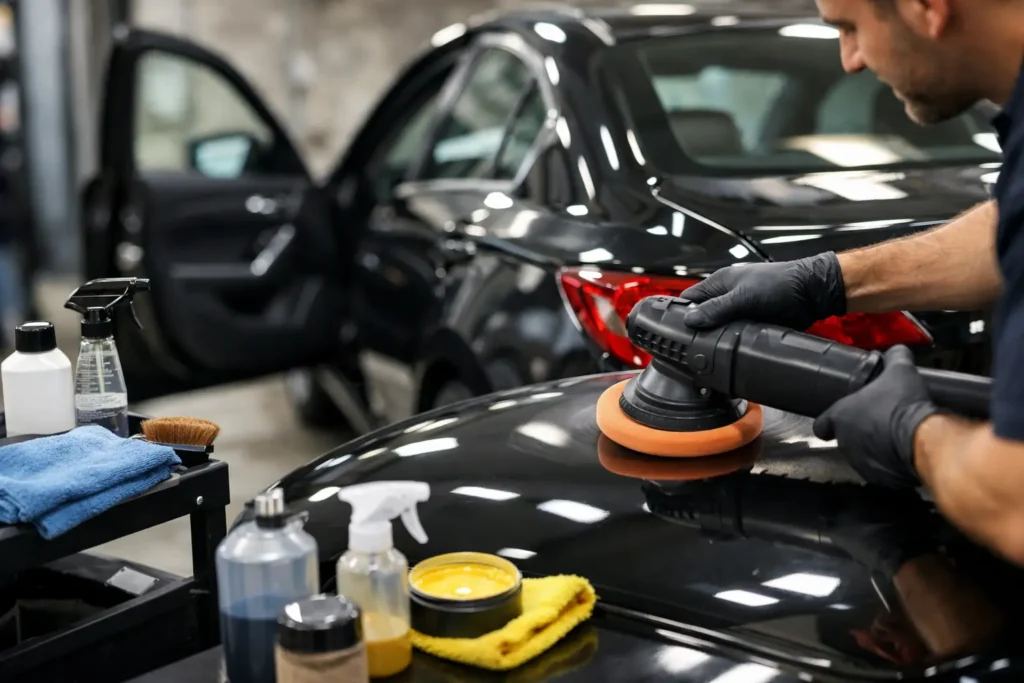
Paintwork benefits from a careful clean and, where suitable, a professional polish to improve gloss and reduce the look of light surface marks. There is a trade-off here. Polishing can lift the finish noticeably, but it is not a cure for deep scratches, stone chips or damaged clear coat. A reputable detailer will assess the paint and recommend an appropriate approach rather than promising an unrealistic transformation.
Wheels and tyres need more than a splash of water. Clean alloy faces, tidy wheel arches and evenly dressed tyres make the car look maintained from the ground up. Avoid an excessively shiny tyre product before an inspection. A clean, natural finish looks more credible and is less likely to flick onto freshly cleaned paint.
Give the cabin a proper reset
A clean interior can make an older car feel remarkably more valuable. Vacuum carpets, seats, mats and the boot thoroughly, including the edges of the seat rails and gaps around the console. Wipe dust from the dashboard, vents, steering wheel, controls and door trims using products suitable for the material.
Focus on touchpoints. Buyers will notice a greasy steering wheel, dusty instrument cluster, marks around window switches and residue in cupholders because these are the places they use immediately. Interior glass should be clear and streak-free, especially the windscreen, rear-view mirror and side windows.
Stains and odours require a measured response. Light food or drink marks may come out with professional fabric cleaning, while set-in stains, cigarette smoke or pet odours can need more intensive treatment. Do not mask smells with a heavy air freshener. It can suggest that something is being covered up. A fresh, neutral cabin is the better result.
Leather, vinyl, fabric and piano-black trim all need different care. Harsh household cleaners can leave surfaces dry, shiny or damaged. This is one reason professional interior detailing is worthwhile before resale: the aim is a clean, natural-looking cabin, not slippery seats or glossy plastics.
Choose Detailing That Matches the Car and Sale Price
The right resale preparation depends on the vehicle’s age, condition and likely selling price. A late-model car in good shape may only need a premium hand wash, interior clean and light finishing work. A family vehicle that has carried kids, pets or sports gear may benefit more from deep upholstery, carpet and boot cleaning.
For a car with visible grime, dull paint and a neglected cabin, a mini detail can be a sensible starting point. At Premium Car Wash in Enfield, a Premium Mini Detail starts from $145 and is designed to provide a more complete makeover than routine maintenance cleaning. For vehicles already kept in good order, a Premium Deluxe Hand Car Wash from $49 or Premium Foam Wash from $65 may be enough to restore day-to-day presentation before photographs and inspections.
Spend where buyers can see and feel the improvement. A clean interior, clear glass, tidy wheels and glossy paint usually deliver more value than expensive cosmetic work on minor flaws that only you have noticed. On the other hand, if the vehicle is a higher-value model with light swirls or faded paint, professional correction may help it stand apart. It depends on the expected sale price and whether the improvement will be visible in person, not just on an invoice.
Do not try to hide significant damage with touch-up products, silicone dressings or temporary fixes. A buyer who discovers a concealed issue may walk away, reduce their offer or lose confidence in the whole sale. Clean, disclose and price the car fairly.
Prepare Car for Resale Detailing for Photos and Inspections
Once the detail is complete, protect the result. Park away from trees, construction dust and sprinklers. Avoid eating in the car, carrying messy cargo or letting passengers pile items back into the cabin. Keep a microfibre cloth handy for a quick wipe of fingerprints from the door handles and infotainment screen before inspections.
Photograph the vehicle soon after it has been cleaned, ideally in soft daylight. Show the exterior from several angles, then include the driver’s area, rear seating, boot, wheels and service books. Clean photos set accurate expectations. If there is an existing scratch or blemish you intend to disclose, a clear image can prevent awkward surprises later.
Before a buyer arrives, open the car briefly to air it out, remove any new dust and check that the number plates, windows and mirrors are clean. Place the service history and spare keys where they are easy to present. Let the buyer see the car in good light without feeling pressured.
A well-detailed car does more than look better in a listing. It signals that its owner has treated it with the care it deserves. Give yourself enough time to have the work done properly, then keep the vehicle clean through the sale period. That quiet confidence is often what helps a buyer picture the car in their own driveway.