
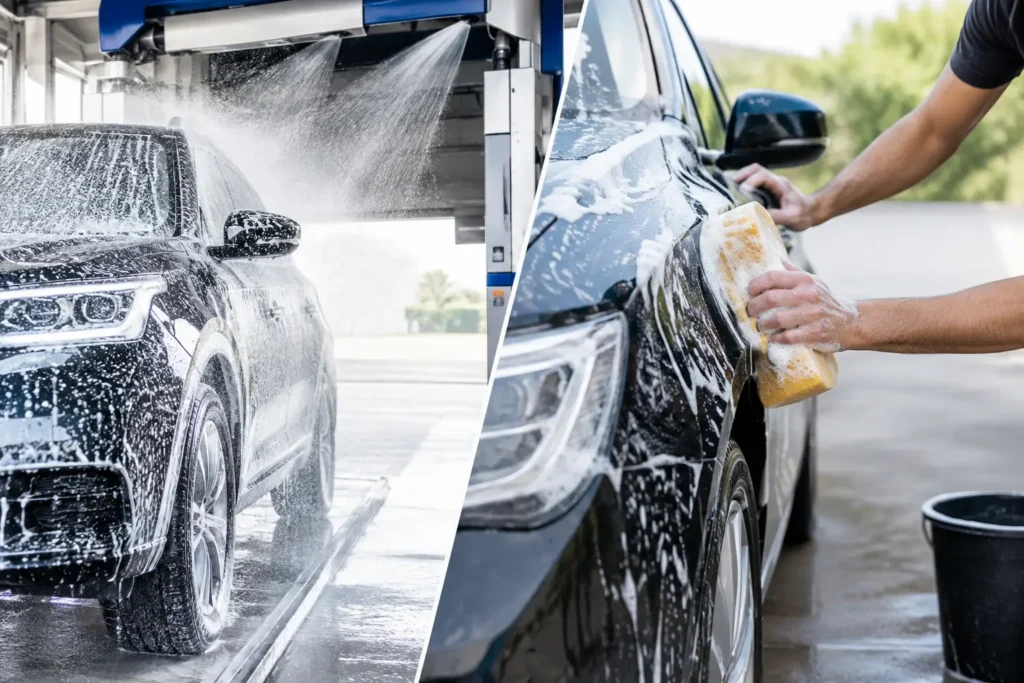
A quick wash may remove the obvious dust, but it does not always leave your paintwork looking properly cared for. When weighing up touchless wash versus manual washing, the real question is not simply which option is faster. It is which approach removes road film, protects the finish and gives your vehicle the presentation it deserves.
For many Sydney drivers, a touchless automatic wash is the convenient choice when time is tight. A professional hand wash, however, offers a level of care that machinery cannot easily match. The better choice depends on your car’s condition, how it is used and the standard of finish you expect when you drive away.
How a touchless car wash works
A touchless wash cleans without brushes or cloths contacting the vehicle. The car is sprayed with water and cleaning chemicals, then rinsed under pressure and dried with blowers. Because nothing physically rubs across the paint, touchless systems are often promoted as a safer alternative to brush-based automatic car washes.
That contact-free process has a genuine advantage. There is less chance of dirty brushes dragging grit over the clear coat. For a lightly dusty vehicle that needs a quick refresh, it can be a practical option.
The limitation is that water pressure and detergent must do almost all the work. They can shift loose dust, pollen and surface grime, but they may struggle with the bonded road film that builds up on lower doors, wheel arches, wheels and the rear of an SUV. In wet Sydney conditions, that film often contains fine grit, traffic residue and oily contaminants that need more than a rinse to lift cleanly.
To compensate, some touchless systems rely on stronger chemicals. Used too frequently, harsh cleaning solutions may reduce the performance of waxes or protective products and can leave the finish looking less vibrant over time. This is not a reason to avoid every touchless wash, but it is a reason to view it as a convenience service rather than complete appearance care.
Touchless wash versus manual washing for paint safety
A manual wash involves direct contact, so its quality comes down to the process and the people carrying it out. Done poorly, hand washing can cause fine scratches and swirl marks. A dirty sponge, a single bucket, rushed drying or wiping a dusty panel are all common causes of avoidable paint damage.
Done professionally, manual washing is the more controlled method. The vehicle can be assessed before cleaning begins. Heavier dirt is rinsed away first, suitable premium products are selected, and clean wash media are used carefully across each area. The cleaner can give extra attention to the places that need it without repeatedly rubbing at the paint.
This is the key difference. Touchless equipment treats every vehicle much the same way. Experienced hand care responds to the condition of the vehicle in front of it. A family SUV with muddy wheel arches, a work ute carrying daily road grime and a well-kept weekend car do not need identical treatment.
At Premium Car Wash, 100% scratch-free hand car care is built around that level of attention. It means treating the paintwork, wheels, glass and exterior trims as different surfaces with different needs, rather than sending every car through a one-size-fits-all cycle.
Where manual washing delivers a better finish
The visible result of a wash is usually decided in the details. Door jambs, badges, mirror housings, fuel flaps, wheel faces and the lower sections of the vehicle are areas where dirt likes to remain. A touchless wash may improve them, but it cannot inspect them or alter its technique when grime is still present.
A hand wash can. The operator can carefully clean around intricate areas, address stubborn marks where safe to do so and check the result before drying. This produces a more even finish, particularly on darker colours where water spots, residue and missed dirt are easy to notice.
Drying matters as much as washing. Automatic blowers can remove much of the water, but droplets often remain behind mirrors, around number plates and in panel gaps. These run down once the car is back on the road, leaving water marks on a clean surface. Hand drying with suitable clean towels gives the exterior a clearer, more polished presentation while allowing a final quality check.
Manual washing also creates the right foundation for additional care. Foam cleaning, tyre dressing, interior vacuuming, polishing and detailing work best when the vehicle has been cleaned thoroughly first. If you are preparing for a sale, an event, a client visit or simply want your car to feel fresh again, this extra level of finish is often worth the time.
When a touchless wash still makes sense
Touchless washing is not without a place. If your vehicle has only light dust and you need a quick exterior rinse between proper services, it can be better than letting grime sit for weeks. It can also suit drivers who want a simple wash outside normal service hours.
It may be a reasonable short-term choice after light rain or during a busy week, particularly if the alternative is no cleaning at all. The important point is to keep expectations realistic. It is unlikely to deliver the same inspection, targeted cleaning or showroom-style finish as a careful hand wash.
If you choose touchless, look for a facility that maintains its equipment well and avoid relying on it as your only cleaning method. A regular professional hand wash can remove the build-up that quick automated washes leave behind.
The cost of cleaning versus the value of care
A touchless wash can appear cheaper because it is fast and requires no personal service. Yet the lowest upfront price is not always the best value if you still need to clean wheels, wipe water spots or arrange a more thorough wash soon afterwards.
Manual washing costs more because it involves trained staff, premium products, time and close attention to your individual vehicle. For daily drivers, the difference can be seen in cleaner wheels, clearer glass, a fresher exterior and a finish that holds its presentation longer. For prestige vehicles, newer cars and vehicles you plan to sell, careful paint-safe washing can also support the condition you want to preserve.
The right frequency depends on where and how you drive. A vehicle parked outdoors, used for school runs, commuting or commercial work may benefit from regular maintenance washes. A garage-kept car driven less often might need fewer visits but more detailed care when it is booked in. Coastal air, tree sap, bird droppings and construction dust are all reasons not to wait too long, as contaminants become harder to remove once they bake onto the surface.
Choosing the right wash for your vehicle
Choose a touchless wash when your priority is speed and your car is only lightly soiled. Choose professional manual washing when paint safety, consistent cleanliness and a high-quality finish matter more. The decision is especially clear if your car has dark paint, delicate trims, detailed wheels, visible road film or a finish you take pride in maintaining.
Ask how the wash is performed, not just what it costs. Good vehicle care should involve a thorough pre-rinse, appropriate products, clean tools and careful drying. It should also give you confidence that the people handling your vehicle respect it as a valuable personal or business asset.
A clean car should look cared for rather than merely wet. Whether you drive a family SUV, a commercial vehicle or your favourite weekend car, choosing the right wash helps protect its presentation every time you turn into the driveway.