
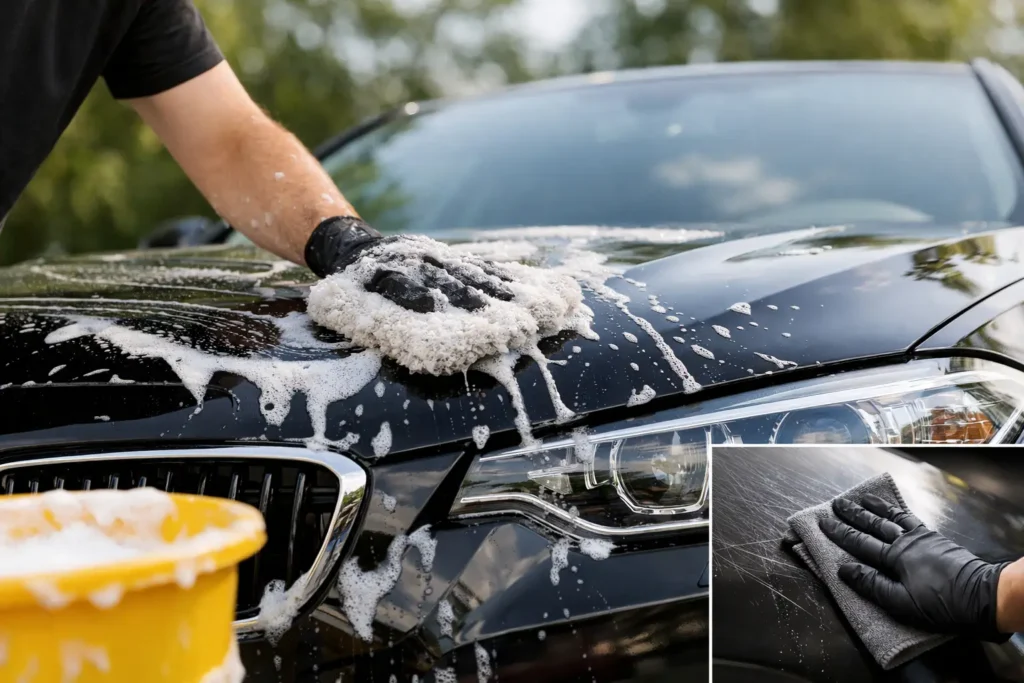
A clean black car in Sydney sunlight can reveal every mark. Fine swirl marks around the door handles, dull patches on the bonnet and light scratches on the panels are often blamed on the wrong product, when the real issue is friction during washing. So, does hand washing prevent scratches? It can dramatically reduce the risk, but only when it is carried out with clean tools, careful technique and the right products.
Hand washing is not automatically scratch-free simply because it is done by hand. A dirty sponge, one bucket of gritty water or an overly enthusiastic wipe can mark paint just as quickly as a poorly maintained automatic wash. The difference is that a professional hand wash gives trained staff the control to identify dirt, adjust the process and treat your vehicle with the care it deserves.
Does hand washing prevent scratches better than an automatic wash?
In most cases, yes. A quality hand wash is the safer choice for paint because it reduces unnecessary contact with dirty brushes, belts and cloth strips used by many automatic systems. Those materials can hold road grit from earlier vehicles. When they move across your paintwork at speed, that grit can create the fine circular marks commonly called swirl marks.
Hand washing allows each stage to be handled with purpose. Loose dust and grit can be rinsed away before any wash mitt touches the paint. Heavier contamination around the wheels, lower doors and rear bumper can be cleaned separately, rather than dragged over cleaner panels. Delicate areas such as gloss-black trim, badges, mirrors and freshly repaired paint can also receive more considered attention.
That said, not every automatic wash causes visible damage, and not every hand wash is performed well. Modern touchless washes avoid physical brushes, but strong chemicals and incomplete drying can still affect the finish over time. A rushed hand wash using one old sponge and a single bucket can be worse than either option. The method matters, but the standard behind it matters more.
Why washing can create scratches in the first place
Most wash-related marks are not deep scratches. They are tiny abrasions in the clear coat, the transparent protective layer above your car’s paint colour. Under direct sun or service-station lighting, these abrasions scatter light and make the paint look hazy rather than crisp and glossy.
The usual culprit is abrasive dirt. Sand, brake dust, road film, dried mud and fine debris collect on the lower half of a vehicle, particularly after wet weather or motorway driving. If that contamination is rubbed across a panel before it has been loosened and rinsed away, it acts like very fine sandpaper.
Dry wiping is another common cause. Running a towel, sleeve or dusty wash mitt over a dry vehicle may seem harmless, especially when removing bird droppings or a small patch of dust. Yet even light dust can contain sharp particles. It is always safer to use plenty of water and suitable cleaning solution first.
Paint condition also changes the outcome. Older, neglected or softer paint may mark more easily, while a vehicle with a quality protective coating is generally easier to wash safely. Protection helps, but it does not make paint invincible. Good washing habits are still the foundation of a clean, polished finish.
What a paint-safe hand wash should include
A scratch-conscious wash starts before the mitt is used. The vehicle should first receive a thorough pre-rinse to remove loose debris from the bodywork, wheel arches, sills and behind the wheels. Foam pre-wash is particularly useful because it helps soften traffic film and grime, allowing them to slide away more easily during rinsing.
After that, a clean, soft microfibre wash mitt and pH-balanced car shampoo should be used with generous lubrication. The mitt should glide across the panel rather than be pressed into it. Straight, overlapping passes are generally kinder to paint than tight circular scrubbing, as any accidental marks are less noticeable and easier to correct.
Clean water is essential throughout the process. A professional setup separates dirty rinse water from fresh wash solution, reducing the chance of reintroducing grit to the paint. Wheels, tyres and heavily soiled lower sections should also have dedicated brushes and cloths. Brake dust is abrasive, so the tool used on a wheel should never be used on the bonnet or doors.
Drying deserves equal care. Letting water air-dry can leave mineral spots, particularly in warm weather. But using an old chamois or rough towel can introduce fresh marks. Plush, clean microfibre drying towels, light pressure and frequent towel changes help absorb water safely while preserving the shine created during washing.
The tools that make the difference
Premium products are valuable, but cleanliness is even more important. The best shampoo cannot compensate for a mitt dropped on the ground and used again. If a wash mitt, towel or applicator picks up grit, it should be rinsed thoroughly or replaced before it returns to the paintwork.
Microfibre is a preferred material because its fine fibres lift and hold dirt away from the surface when used correctly. It still needs to be washed, stored and inspected properly. Stiff brushes, household sponges, old bath towels and worn chamois are more likely to trap debris or create excessive friction.
For home washing, avoid dishwashing liquid. It may remove grime, but it can also strip existing waxes and leave paint less protected. Choose a dedicated automotive shampoo, work in the shade where possible and do not wash a hot panel. Heat causes water and shampoo to dry too quickly, increasing the chance of water spots and streaking.
Can hand washing remove existing scratches?
A careful hand wash prevents further wash-induced marking, but it will not remove scratches already in the clear coat. In fact, washing often makes existing swirls easier to see because dirt no longer hides them. This is where professional polishing can help.
Polishing uses suitable compounds and pads to level the clear coat very slightly around superficial marks, restoring clarity and reflection. It is not appropriate for every scratch. If a mark catches your fingernail, appears white or exposes primer, it may be too deep for simple polishing and could need touch-up or paint repair.
After polishing, adding wax, sealant or a ceramic-style paint protection product can improve gloss and make future maintenance easier. These products create a sacrificial layer that helps reduce direct contact between grime and paint. They are worthwhile for daily drivers, family SUVs, prestige vehicles and commercial cars that need to stay presentable, but they still require safe washing.
How often should you choose a professional hand wash?
For many Sydney drivers, every two to four weeks is a practical rhythm. Cars parked outdoors, driven daily, used near construction zones or regularly exposed to bird droppings, tree sap and coastal air may need more frequent attention. A vehicle that is garaged and driven mainly on weekends may need less.
The key is not to wait until grime has bonded heavily to the paint. Frequent gentle maintenance is safer than allowing contamination to build up and then scrubbing aggressively. This is especially true for white cars, dark metallic finishes and black paint, where marks and loss of gloss are often more obvious.
At Premium Car Wash in Enfield, professional hand car care is designed around this principle: clean the vehicle thoroughly while treating its paintwork, trim and finish with uncompromising quality. A routine hand wash can maintain everyday presentation, while deeper foam cleaning, polishing and mini detailing are useful when the finish needs extra attention.
The practical answer for your paintwork
Hand washing is one of the best ways to prevent wash-related scratches, provided the process removes grit before contact and uses clean, paint-safe tools from start to finish. It is not a guarantee against every mark – road debris, careless parking, children’s bikes and harsh weather all play their part – but it gives your vehicle its best chance of staying glossy and well cared for.
When your car is more than transport for the school run, commute or workday, a careful wash is not a small detail. It is the regular maintenance that keeps the paint looking as good as the drive feels.
Pingback: Hand Wash Review: Is Premium Care Worth It? - Premium Car Wash
Pingback: Touchless Wash Versus Manual Washing Compared - Premium Car Wash