
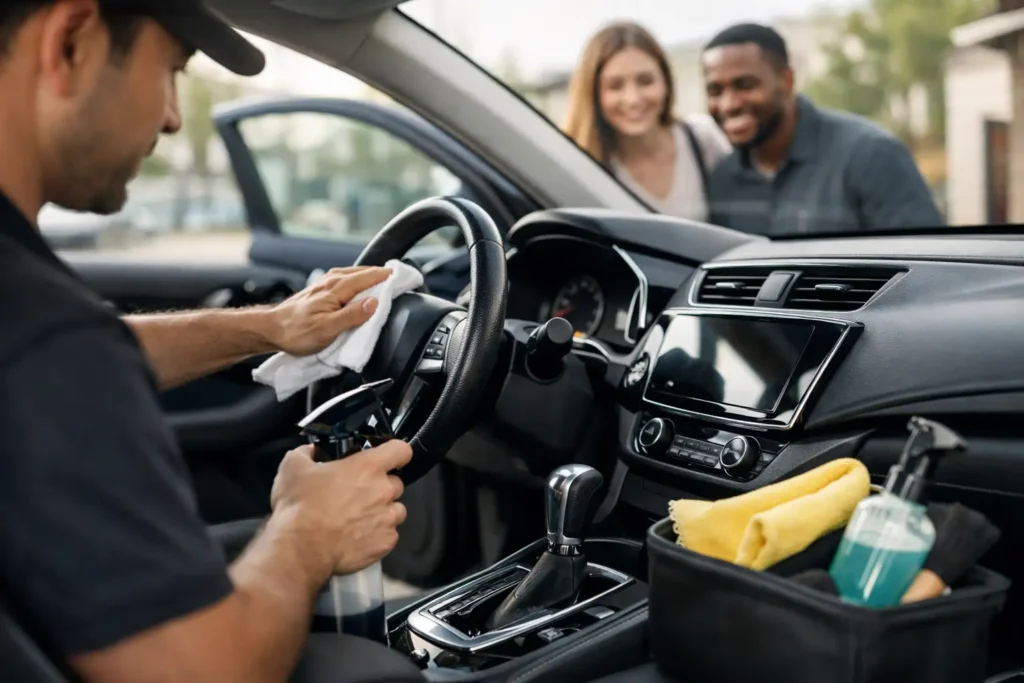
A passenger may only spend 12 minutes in your car, but they notice its condition before they have even fastened their seatbelt. Smudged windows, a tired-smelling cabin or crumbs around the rear seats can affect their comfort and their impression of the trip. Car detailing for rideshare drivers is not simply about looking good at the kerb. It is practical maintenance for a vehicle that represents your service, every day.
For Sydney drivers balancing peak-hour traffic, airport runs, late-night pickups and family use, the challenge is keeping a hardworking vehicle presentable without losing too much earning time. The right routine keeps the cabin fresh between fares, protects high-contact surfaces and gives the exterior the premium care it deserves.
Why rideshare vehicles need a different cleaning routine
A private vehicle might carry the same people most days. A rideshare vehicle carries a changing stream of passengers, bags, takeaway coffees, wet umbrellas, beach sand and occasionally pets. That means the interior can lose its fresh appearance much faster than a typical daily driver.
The rear cabin deserves particular attention. Passengers judge this area closely, from the seat fabric and floor mats to the condition of door trims, seat pockets and windows. A clean front dash is welcome, but it will not compensate for rubbish in the rear door pocket or dust settled on the back seats.
Exterior presentation matters too. Your paintwork is exposed to city grime, bird droppings, tree sap, brake dust and frequent road debris. Leaving contaminants on the paint for too long can dull the finish and make a well-maintained vehicle look neglected. Automated washes may be quick, but brushes and poorly maintained equipment can leave fine scratches. For drivers whose car is a business asset, scratch-free hand car care is a more considered choice.
Car detailing for rideshare drivers starts with frequency
There is no single detailing schedule that suits every driver. It depends on your weekly hours, the type of fares you take, where you park and whether the car also carries children, sport gear or pets. Still, a simple three-level approach makes the workload manageable.
Between every shift: reset the passenger space
Before starting a shift, take three to five minutes to inspect the rear seats and footwells. Remove rubbish, shake out loose dirt from mats where appropriate and check seat pockets, cup holders and door bins. Wipe obvious marks from touchpoints such as interior door handles and window switches using a suitable interior cleaner rather than a harsh household product.
Open the doors briefly to air out the cabin. A light, clean scent is enough. Strong air fresheners can be unpleasant for passengers and may give the impression that an odour is being covered up. If the car has a persistent smell, the answer is proper interior cleaning, not more fragrance.
Keep a compact kit in the boot so a small spill does not become a bigger problem during a long day. The useful basics are a microfibre cloth, gentle interior wipes, a small rubbish bag and a glass-cleaning cloth. Add a stain remover designed for automotive upholstery if your seats are fabric. The goal is not a full detail at the kerb – it is a fast reset that keeps standards consistent.
Every week or fortnight: maintain the exterior and glass
How often you need a wash comes down to the conditions your vehicle faces. A car parked under trees or driven through construction-heavy routes may need attention weekly. A vehicle garaged overnight and used mainly for short suburban trips may comfortably sit on a fortnightly schedule.
A quality hand wash removes surface grime while treating paintwork with care. Clean wheels, tyres and door jambs make a surprising difference because they are areas passengers see while entering and exiting. Clear windows and mirrors are equally essential. Aside from their visual value, they support safer driving in rain, glare and low-light conditions.
Avoid letting bird droppings, sap and bugs bake onto the paintwork. These contaminants can be more damaging than ordinary dust, especially under the Sydney sun. Prompt, gentle removal is always preferable to aggressive scrubbing later.
Every few months: restore the details passengers notice
A periodic mini detail is where a busy rideshare vehicle gets its polish back. This is the time to deep-clean mats and upholstery, treat stains, clean interior crevices, refresh the dashboard and trim, and bring the exterior back to a more even shine. It is especially worthwhile after a wet season, a run of beach trips or a period of heavy driving.
For leather or leather-look seating, professional cleaning and conditioning can help maintain a clean, supple finish without leaving surfaces overly shiny or slippery. For fabric interiors, extraction-style cleaning can lift embedded dirt and help deal with spills before they become permanent marks. The right approach depends on the material, the age of the stain and how much moisture the cabin can safely handle before your next shift.
Focus on the areas that affect passenger confidence
Rideshare cleaning is not about chasing perfection in every hidden corner each day. It is about getting the visible and high-contact areas right, consistently. Start with the rear seats, mats, door trims, windows and seatbelts. Then check the front passenger area, centre console and exterior door handles.
Glass deserves more care than many drivers give it. Streaks become obvious at night, particularly when streetlights and headlights reflect across the windscreen. Clean inside and outside glass properly, including the rear windows. Do not forget the camera and sensor areas if your vehicle has driver-assistance technology.
Your boot also forms part of the passenger experience on airport or shopping trips. Keep it clear enough for luggage, vacuum loose debris and remove personal items where possible. A boot full of gym gear, tools or loose shopping bags makes a car feel less prepared, even when the cabin is spotless.
Protect your earnings by protecting the car
Detailing supports more than passenger comfort. Regular cleaning makes it easier to spot small problems, such as scuffed trim, seat damage, leaking fluids or paint marks that need attention. It can also reduce the build-up that contributes to premature wear on frequently touched surfaces.
Paint protection and careful wash methods are worth considering if you drive high weekly kilometres. They do not make the vehicle maintenance-free, and they will not prevent every mark from city driving. What they can do is make routine cleaning easier and help preserve a cleaner-looking finish over time.
There is a cost-versus-time decision here. Doing every task yourself can save money, but it takes time and may not deliver the same result if you lack the equipment or products for deep cleaning. Booking professional care periodically lets you handle quick daily resets while leaving intensive interior work, paint-safe washing and polishing to trained hands.
For local drivers, Premium Car Wash in Enfield offers a practical starting point, with a Premium Deluxe Hand Car Wash from $49, Premium Foam Wash from $65 and Premium Mini Detail from $145. A professional service can be especially useful before returning to a busy driving schedule, after a spill-heavy week or when your vehicle needs a more complete refresh than a vacuum and wipe-down can provide.
Build a routine that fits your driving hours
The best detailing routine is one you can repeat. If you drive weekends and evenings, set aside a short reset before each shift and a more thorough clean on a quieter weekday. If rideshare driving is your full-time work, schedule your wash and interior maintenance like any other business task rather than waiting for the car to look visibly tired.
Keep records of deeper cleans, stain treatments and any protective services. This helps you work out what your vehicle actually needs and can be useful when it is time to sell or trade it in. A clean, consistently cared-for vehicle is easier to present well, whether it is meeting a passenger at the airport or a prospective buyer at the kerb.
Your vehicle works hard for every fare. Give passengers a calm, clean space, give the paintwork careful attention, and give your car the uncompromising quality of care it deserves.