
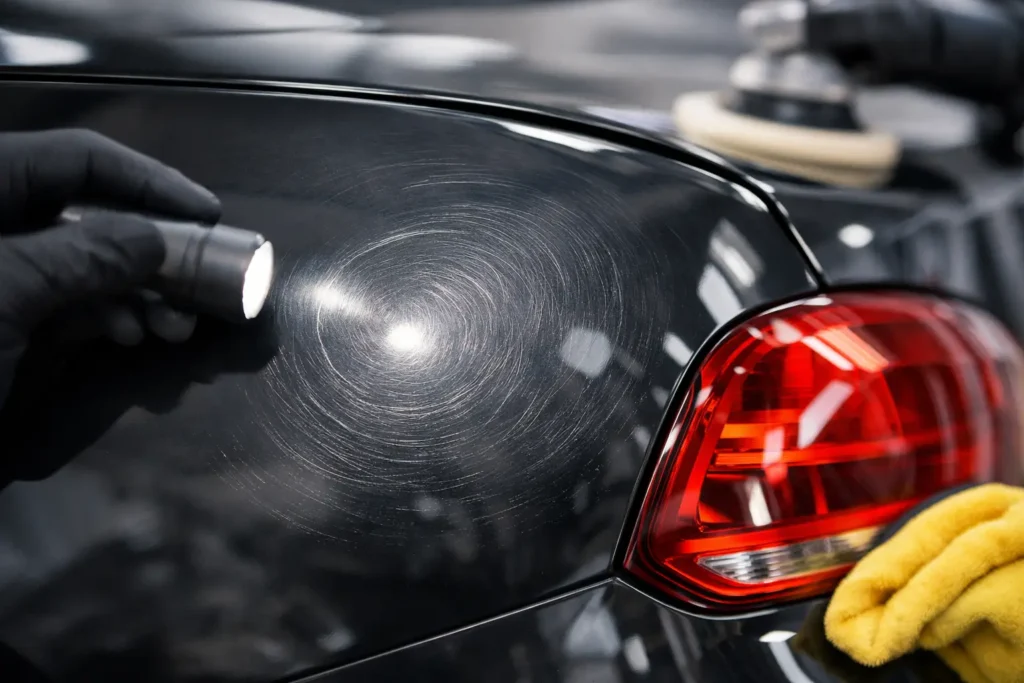
Your car can look clean at first glance, then reveal a web of fine circular scratches as soon as Sydney sunlight hits the paint. If you are asking what causes car paint swirl marks, the short answer is friction: tiny particles of dirt are dragged across the clear coat during washing, drying or wiping. The good news is that most swirl marks are preventable with better washing habits and proper hand care.
Swirl marks are frustrating because they dull the deep, glossy finish you expect from a well-kept vehicle. They are especially visible on black, dark blue, charcoal and other darker paint colours, but any vehicle can develop them over time. Understanding where they come from helps you protect a major asset and keep it looking the part every day.
What causes car paint swirl marks?
Despite the name, swirl marks are not usually caused by paint literally swirling. They are a pattern of very fine scratches in the vehicle’s clear coat, the transparent protective layer over the coloured paint. When a wash mitt, towel, sponge or brush moves in repeated motions over contaminated paint, it can leave light scratches that catch and scatter the light.
The pattern often looks circular because people naturally clean in circles, particularly when hand-polishing, washing panels or drying around curved areas. Under direct sun, service-station lighting or bright car park lights, these fine scratches become far more obvious.
Not every mark on paint is a swirl mark. A deep scratch that catches your fingernail may extend beyond the clear coat and require a different repair approach. Swirl marks, by contrast, are generally surface-level defects. In many cases, professional polishing can safely reduce or remove them, provided there is enough healthy clear coat remaining.
The everyday habits that create swirls
Washing a dusty car without a proper pre-rinse
Road dust, brake dust, sand, pollen and grit settle on every vehicle, even when it has only been parked outside for a day or two. Wiping that contamination away with a dry cloth or sponge is one of the quickest ways to mark the paint. The particles act like very fine abrasive material between the cloth and clear coat.
A proper pre-rinse and foam treatment help loosen and carry away loose grime before any wash mitt touches the vehicle. This is particularly valuable after driving in wet weather, near construction sites, along dusty roads or around Sydney’s busy inner-west traffic.
Using dirty wash tools
A wash mitt that was dropped on the ground, a sponge left sitting in a dirty bucket, or an old towel used repeatedly can hold grit in its fibres. Even if the tool appears clean, trapped debris can scratch the paint during the next wash.
This is why professional paint-safe washing is about more than using premium shampoo. Clean tools, fresh wash water and careful technique are equally important. A quality microfibre mitt can be gentle on paint, but only when it is thoroughly clean and used correctly.
One bucket, one sponge and contaminated water
When the same bucket of water is used throughout a wash, dirt lifted from lower panels can be transferred straight back onto the car. The risk increases around sills, wheels, bumpers and the rear of SUVs and utes, where road grime tends to build up.
Using separate wash and rinse water helps limit that contamination. The wash mitt should be rinsed regularly before returning to clean shampoo solution. It takes more care than a quick wash, but it makes a real difference to the long-term appearance of the paint.
Automated brushes and harsh cleaning equipment
Some automated car washes use brushes that may be carrying dirt from previous vehicles. Those brushes can move quickly across the paint with pressure and repeated contact. The result can be visible swirl marks, fine straight scratches or a generally hazy finish.
Not every automated wash will leave obvious damage after one visit, and the condition of the equipment matters. Still, repeated brush contact creates an avoidable risk, especially for darker cars or vehicles with soft paint. A careful hand wash offers greater control over the tools, pressure and condition of each panel.
Drying with the wrong towel or technique
Drying is often where a good wash can go wrong. Using an old bath towel, chamois, rough cloth or poorly maintained microfibre can drag remaining contamination across the clear coat. Rubbing aggressively to chase every water spot adds more friction again.
A clean, high-quality drying towel should gently absorb water rather than scour the surface. Blotting or using smooth, straight passes is generally safer than firm circular rubbing. If the car has not been thoroughly rinsed, drying should pause until any remaining grit is removed.
Rubbing at bird droppings, tree sap and stains
Bird droppings, tree sap, insect residue and baked-on contaminants need prompt attention, but scrubbing them hard with a dry tissue or serviette can cause fresh marks. Some of these contaminants can also etch the clear coat if left on the vehicle in heat.
The safer approach is to soften the residue first with suitable cleaner or water, then lift it away gently with a clean microfibre cloth. If it has hardened or stained the paint, professional assessment is wiser than forceful rubbing.
Poor polishing and waxing practices
Polishing can restore gloss, but it is not automatically paint-safe. A dirty applicator pad, unsuitable compound, excessive pressure or repeated circular hand movements can add marring rather than improve the finish. The same applies to waxing when an applicator or removal towel is contaminated.
Paint correction requires judgement. A light finishing polish may improve surface swirls, while deeper defects may need more correction. Every polishing stage removes a small amount of clear coat, so the goal should be the best safe improvement, not aggressive correction for its own sake.
Why some cars show swirl marks more easily
Dark paint makes light scratches stand out because of the contrast between the surface and reflected light. Black vehicles are well known for showing swirls, yet white, silver and light-coloured cars can have the same marks – they are simply harder to see except under certain lighting.
Paint hardness also varies between manufacturers and models. Softer clear coats can mark more easily but may respond well to polishing. Harder clear coats may resist minor scratches better, though correcting them can take more time and specialised equipment. The age of the vehicle, previous wash history and whether it is regularly parked outdoors also affect its condition.
Ceramic coatings and paint protection products can make cleaning easier and add useful protection, but they do not make a car immune to poor wash techniques. Dirt still needs to be removed safely. A coated vehicle can still develop swirl marks if it is wiped dry, washed with dirty tools or run through abrasive brushes.
How to prevent swirl marks between professional washes
The best prevention is to avoid rubbing dry dirt into the paint. Rinse first, use clean wash media, keep wheel-cleaning tools separate from paintwork tools, and dry gently with fresh microfibre towels. Washing from the top down also helps, as the dirtiest lower sections are left until later.
Avoid using a single sponge for the entire car. Sponges can trap particles on their flat surface, whereas quality wash mitts are designed to hold contamination away from the paint more effectively when rinsed regularly. Never use the same cloth on wheels and body panels.
It also pays to be realistic about quick clean-ups. A light layer of dust may tempt you to wipe the bonnet before heading out, but a dry wipe can cost more in paint correction later. If a full wash is not practical, leave the dust alone until you can rinse and clean the car properly.
For drivers who rely on their vehicle for work, family travel or client visits, regular professional maintenance is often the easiest option. Consistent care prevents grime from becoming heavily bonded to the paint and keeps the finish presentable without repeated harsh cleaning.
Can swirl marks be removed?
Many light swirl marks can be significantly reduced through professional machine polishing. The process refines the clear coat surrounding the fine scratches so the surface reflects light more evenly. The vehicle can regain noticeably better depth, clarity and gloss.
The result depends on the depth of the defects, paint condition and how much clear coat is available for safe correction. Deep scratches, paint chips and etching may need more than polishing. A reputable detailer should inspect the vehicle and recommend a sensible level of correction rather than promise that every mark will disappear.
At Premium Car Wash in Enfield, careful hand washing and professional detailing are designed to give your vehicle the care it deserves, from ongoing maintenance through to a showroom-style refresh. Protecting the finish starts with the next wash: choose clean tools, gentle technique and uncompromising quality each time your paint is touched.
Pingback: Best Scratch Free Car Wash: What to Look For - Premium Car Wash
Pingback: Eco Friendly Car Washing Without Cutting Corners - Premium Car Wash
Pingback: Best Car Detailing Services Sydney for Lasting Shine - Premium Car Wash
Pingback: Does Hand Washing Prevent Scratches on Cars? - Premium Car Wash