
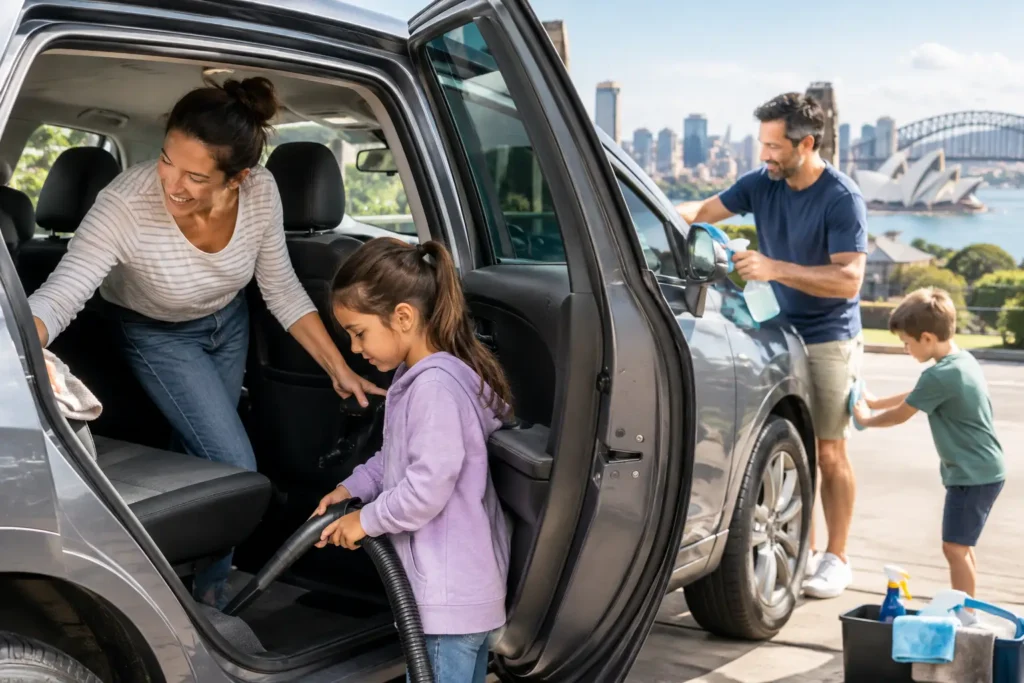
The back seat tells the real story of family life: crumbs under the child seat, fingerprints on the windows, a mystery mark on the door trim and a school bag that has spent one rainy afternoon on the floor. A good family car hygiene guide is not about keeping a daily driver perfect. It is about making it a cleaner, healthier and more pleasant place for every school run, weekend sport trip and long drive.
For busy Sydney families, the most effective approach is simple: deal with mess quickly, focus on the surfaces hands touch most, and schedule a proper interior refresh before grime becomes embedded. Small habits protect the vehicle’s presentation while making the cabin more comfortable for the people who spend the most time in it.
Why family-car hygiene needs a routine
Cars are compact, enclosed spaces. Food scraps, damp towels, sandy shoes, pet hair and takeaway cups can all build up faster than expected, particularly in SUVs and people movers used every day. Once moisture and organic mess are left in carpet or upholstery, odours can linger and stains can become much harder to remove.
The issue is not just what is visible. Steering wheels, gear selectors, door handles, window switches, seat-belt buckles and touchscreen controls are touched repeatedly by different hands. A regular wipe-down helps keep these high-contact areas presentable between full cleans.
There is a balance to strike. Constantly using harsh disinfectants can dry out leather, mark delicate trim and leave strong fumes in a closed cabin. For general family use, gentle interior-safe cleaning and frequent removal of rubbish are usually more useful than overdoing chemical products. Use a disinfectant only where it is suitable for the material and follow its label directions carefully.
The family car hygiene guide: a practical weekly reset
A 10-minute reset once a week prevents the car from reaching the point where cleaning feels like a major project. Choose a time that fits your routine, such as after Saturday sport or before the Monday commute, and start by removing everything that does not belong in the cabin.
Empty door pockets, cup holders, seat-back pockets and the boot. Check under the front seats, where snack wrappers, hair ties and small toys tend to collect. Shake out removable mats, then vacuum carpets and seats with particular attention to the gaps around child restraints and the joins in rear seat cushions.
Next, use a clean microfibre cloth lightly dampened with an interior-safe cleaner on touch points. Wipe the steering wheel, indicator stalks, gear selector, handbrake, door pulls, buttons and centre console. Do not spray product directly onto switches, screens or vents. Apply it to the cloth first, and use a separate dry microfibre cloth for screens to avoid smears or moisture getting into sensitive areas.
Finish with the inside of the windscreen and side windows. A film of fingerprints, dust and residue can make glare worse, especially when driving into low afternoon sun. Clean glass improves visibility as well as presentation.
Treat spills before they become stains
The faster a spill is addressed, the better the result. Blot liquid with an absorbent cloth or paper towel rather than rubbing it into the fabric. For water-based spills, use a small amount of upholstery-safe cleaner and blot again. Avoid soaking the seat, as trapped moisture can create a musty smell.
Milk, yoghurt, juice and food spills deserve more attention than plain water. Remove as much residue as possible, clean the affected area gently and allow it to dry fully with doors open where practical. If the spill has reached the foam beneath the upholstery, or the odour returns after cleaning, professional interior treatment is often the more reliable option.
Greasy marks from chips or sunscreen can also be stubborn. Household products may seem convenient, but some leave a residue that attracts more dirt or causes colour change on fabric and leather. A product designed for automotive interiors is the safer choice.
Keep child seats clean and safely fitted
Child seats are crumb collectors by design, but their safety features need careful handling. Vacuum around the base and beneath the seat regularly, using a narrow attachment where possible. Wipe hard plastic sections with a soft cloth and an appropriate mild cleaner.
Before removing covers, straps or padding, check the child-seat manufacturer’s instructions. Some covers can be washed, while others require spot cleaning only. Harness straps should not be saturated or treated with unsuitable chemicals, as products may affect the webbing. Once the seat is cleaned or temporarily removed, make sure it is refitted correctly.
It is also worth checking the rear-seat area after wet-weather outings. Damp school uniforms, towels and umbrellas can leave moisture behind the child seat or in footwells. Drying these areas promptly helps prevent lingering odours.
Fresh air matters as much as clean surfaces
A clean-looking cabin can still feel unpleasant if the air is stale. Start with the obvious sources: remove rubbish, clean spills and vacuum fabric surfaces where dust and food particles settle. Then look at ventilation.
If the air-conditioning smells musty when first switched on, the cabin air filter may need attention. Filters collect dust, pollen and road grime over time, so replacement should be part of normal vehicle servicing according to the manufacturer’s schedule. Running the air-conditioning periodically can also help manage moisture in the system.
Avoid relying on heavily fragranced air fresheners to cover up a problem. They can be overpowering for children and do not remove the source of an odour. A properly cleaned, dry interior should smell neutral and fresh, not perfumed.
The areas families often miss
Cup holders, seat-belt buckles and door storage compartments are easy to overlook because they are used constantly. They are also where sticky residue tends to collect. A soft detailing brush or cotton bud can help lift dirt from small joins, followed by a careful wipe with a clean cloth.
Do not forget the boot. Prams, sports gear, grocery bags, muddy boots and pets all leave their mark there. Vacuum the boot carpet, remove loose debris from the spare-wheel area if accessible, and wipe down hard plastic trims. A washable boot liner can reduce the workload if the space is used heavily.
Exterior hygiene has a place in the routine too. Door handles, the boot release, fuel flap and lower door edges are often touched after shopping, sport or school drop-off. A quality hand wash keeps these areas cleaner without the harsh brushes that can compromise paintwork.
Build a small car-cleaning kit
Keeping a few essentials in the boot makes quick clean-ups far easier. Store them in a sealed container so they do not roll around: microfibre cloths, paper towel, a small rubbish bag, interior-safe wipes or cleaner, a soft brush and a spare towel for wet shoes or spills.
For families with younger children, add a change of clothes and a waterproof bag for soiled items. The goal is not to turn the car into a cleaning cupboard. It is simply to have the right basics available when a drink tips over five minutes into a drive.
When a deeper clean is worth it
Weekly maintenance keeps day-to-day mess under control, but it cannot always remove embedded dirt, pet hair, old food smells or marks in upholstery. A professional interior clean is particularly worthwhile after holidays, wet winter months, a long road trip, before selling the vehicle or when the cabin no longer feels fresh despite regular effort.
For a family vehicle, look for hand car care that treats the interior and exterior with the same attention to detail. Premium Car Wash in Enfield provides 100% scratch-free hand car care and interior detailing options designed to restore a clean, polished feel without treating your family car like just another vehicle in a queue.
A clean family car will still collect crumbs, sand and the occasional surprise. That is part of using it well. With a simple reset each week and timely deeper care when needed, every trip can begin in a cabin that feels fresh, comfortable and ready for the people who matter most.