
A car can look clean on the outside yet still feel unpleasant the moment the door closes. Whether it is a lingering takeaway smell, damp floor mats after wet weather, pet hair, spilled milk or old cigarette smoke, knowing how to remove car odours properly means treating the source, not simply masking it with an air freshener.
A quality interior clean restores more than presentation. It makes daily commutes, school drop-offs, client visits and weekend drives more comfortable, while helping preserve the condition and value of your vehicle. The right approach depends on what caused the smell, how long it has been there and whether moisture has reached the carpet, seats or ventilation system.
Find the source before you try to remove car odours
An air freshener can give a short burst of fragrance, but it will mix with an existing odour rather than eliminate it. Before applying any product, take a few minutes to identify where the smell is strongest. Check under the front seats, inside door pockets, in the boot, around child seats and beneath removable floor mats.
Food odours often come from unnoticed crumbs, takeaway containers or a spill that has seeped into the carpet. A sour or musty smell commonly points to trapped moisture in carpets, fabric seats or the cabin filter. Pet odours tend to cling to fabric fibres and hair, while smoke settles into nearly every soft surface, including the headlining.
If the smell becomes stronger when you turn on the air conditioning, the ventilation system may be contributing. If it is strongest after rain or a car wash, look for damp carpet, blocked drains, worn door seals or a leaking boot seal. These issues need attention before any interior deodorising work will last.
How to remove car odours step by step
Empty the cabin and let fresh air in
Start by removing all rubbish, personal items, seat covers and floor mats. Do not overlook the boot, centre console, glovebox or spare-wheel well. A damp gym bag, forgotten drink bottle or old food packaging can be enough to keep an odour circulating through the cabin.
Park in a shaded, well-ventilated spot and leave the doors open while you clean. Direct heat can help dry damp areas later, but cleaning products should not be applied to hot surfaces or left to bake into upholstery.
Vacuum thoroughly, including the places you cannot see
Vacuuming is the foundation of odour removal. Dirt, hair, dust and food particles hold onto smells, particularly in carpet and cloth seats. Move both front seats fully forward and back, then vacuum beneath them, along seat rails, inside crevices and around the pedals.
Use a narrow nozzle around seat seams, door pockets and the edges of the carpet. Remove and vacuum floor mats separately, including their underside. For vehicles used by families, pet owners or rideshare drivers, this detailed first pass often reveals the real cause of the problem.
Clean hard surfaces without soaking the interior
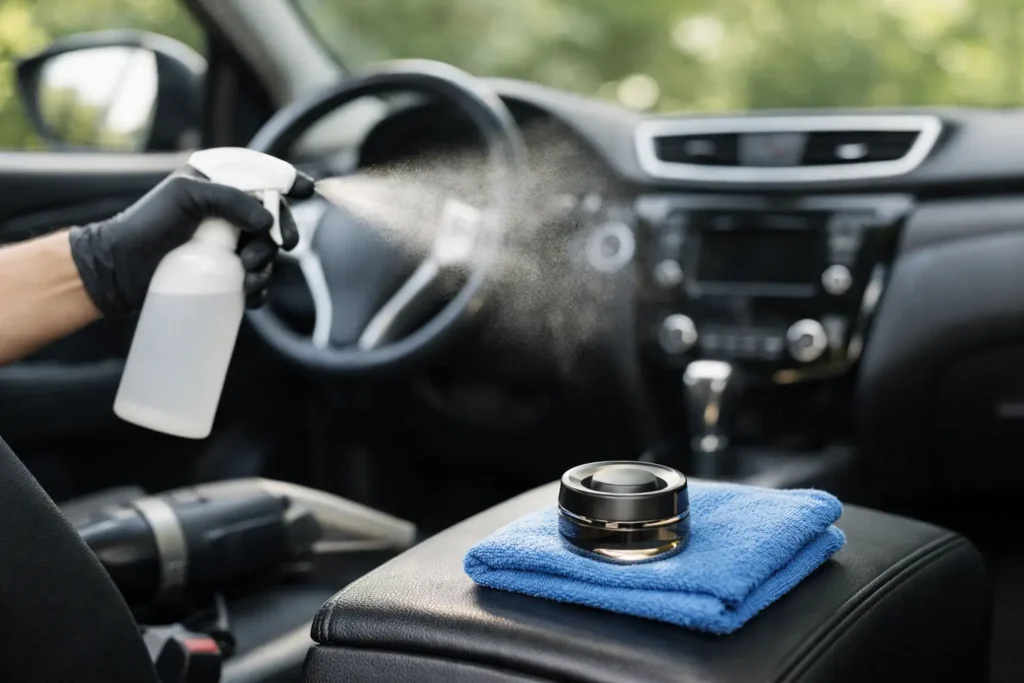
Wipe down the dashboard, steering wheel, centre console, door trims, cupholders and inside glass with a suitable interior cleaner and a clean microfibre cloth. These areas collect skin oils, drink residue and airborne smoke particles that contribute to a stale cabin smell.
Take care around screens, buttons and stitched leather. A lightly damp cloth is safer than spraying cleaner directly onto sensitive surfaces. Leather should be cleaned with an appropriate leather product and then conditioned, as harsh household cleaners can dry it out or leave an unwanted shine.
Treat fabric seats, carpets and mats at the source
For minor food spills or everyday odours, an upholstery cleaner designed for automotive fabrics can be effective. Apply it sparingly, work it gently into the affected area with a soft brush, then blot away moisture with a clean towel. Avoid saturating seats and carpets. Too much water can travel into the foam beneath and create the same damp, musty smell you are trying to remove.
For a fresh spill, act quickly. Blot rather than rub, especially with milk, coffee or soft drink. Rubbing pushes the liquid further into the fibres. Once the area is dry, inspect it closely and repeat the process if any residue or smell remains.
Bicarbonate of soda can help with light, dry odours in carpeted areas. Sprinkle a modest amount over completely dry carpet, leave it for several hours, then vacuum it thoroughly. It is useful as a finishing step, but it will not resolve a deep spill, mould growth or odour trapped in soaked seat foam.
Clean the air conditioning system
If the odour appears when the fan is running, inspect or replace the cabin air filter according to your vehicle manufacturer’s recommendations. A dirty filter can hold dust, pollen and moisture, reducing air quality and creating a stale smell each time the system operates.
Run the air conditioning with the windows open for several minutes after cleaning the cabin. If there is a persistent mouldy smell from the vents, a professional air-conditioning treatment may be needed. This cleans areas of the system that are difficult to reach without the right equipment.
Dry everything completely
Drying is what makes odour removal stick. Leave the doors or windows open in a secure, ventilated area until carpet, mats and seats are fully dry. If weather permits, indirect airflow and time are better than closing the car up while moisture remains inside.
Check the carpet with your hand, particularly in the rear footwells and under floor mats. If it still feels cool or damp, it is not ready to be sealed back up. Persistent moisture can lead to mould, which is unpleasant, difficult to remove and potentially harmful for people with allergies or respiratory sensitivities.
Match the treatment to the odour
Some smells need more than a general interior clean. Milk and protein-based spills can turn sour quickly, particularly in Sydney’s warmer months. These need a fabric-safe enzyme cleaner that breaks down the organic residue. If the liquid has reached the seat foam or underlay, professional extraction is usually the more reliable option.
Pet odours require a similar approach. Remove all hair first, then treat the fabric and carpet with an enzyme product. Do not assume the back seat is the only affected area. Hair and dander can settle in the boot, seatbelt webbing, floor mats and air vents.
Smoke odour is among the most stubborn because it settles into the headlining, fabrics, plastics and ventilation system. Strong fragrances may hide it briefly, but thorough cleaning of every interior surface is required. For vehicles being prepared for resale, a professional detail is often worthwhile because buyers notice smoke odour immediately.
Musty or mouldy smells deserve extra caution. Surface cleaning may improve the scent, but it will not fix a water leak or heavily contaminated carpet backing. If you can see mould, the carpet is wet beneath the surface or the smell returns soon after cleaning, arrange a professional inspection and interior treatment. The priority is to eliminate moisture and contamination, not cover it up.
Common mistakes that make car odours worse
The biggest mistake is applying too much cleaner or water. A soaked seat can take days to dry internally, and closing the vehicle overnight traps humidity exactly where odours develop. Use products in controlled amounts and always allow enough drying time.
Another common issue is relying on heavily scented sprays. They can be useful after a proper clean, but they are not a substitute for removing crumbs, residue, moisture or contaminated filters. A genuinely clean car should smell neutral and fresh, not overpoweringly perfumed.
Avoid household bleach, strong disinfectants and harsh degreasers on vehicle interiors. They can stain fabric, damage leather, affect trim finishes and leave fumes in an enclosed cabin. Automotive-specific products are designed for the materials found in your vehicle and are the safer choice.
When a professional interior detail is the better choice
A home clean works well for light odours caught early. It may not be enough after a major spill, floodwater, heavy pet use, smoking, mould or years of built-up grime. Deep odours often sit below the visible surface, inside carpet backing, seat foam and air vents.
Professional detailing combines careful vacuuming, fabric treatment, extraction, surface cleaning and controlled drying to give the cabin the care it deserves. It is also a practical option before selling a vehicle, after buying a used car or when your family SUV, work vehicle or daily driver needs a complete reset.
For vehicle owners in Enfield and surrounding Sydney suburbs, Premium Car Wash provides premium interior cleaning and mini detailing designed to restore freshness without compromising the finish of your cabin. The goal is not to leave behind a stronger fragrance, but to leave you with a clean, comfortable vehicle you are happy to step back into.