
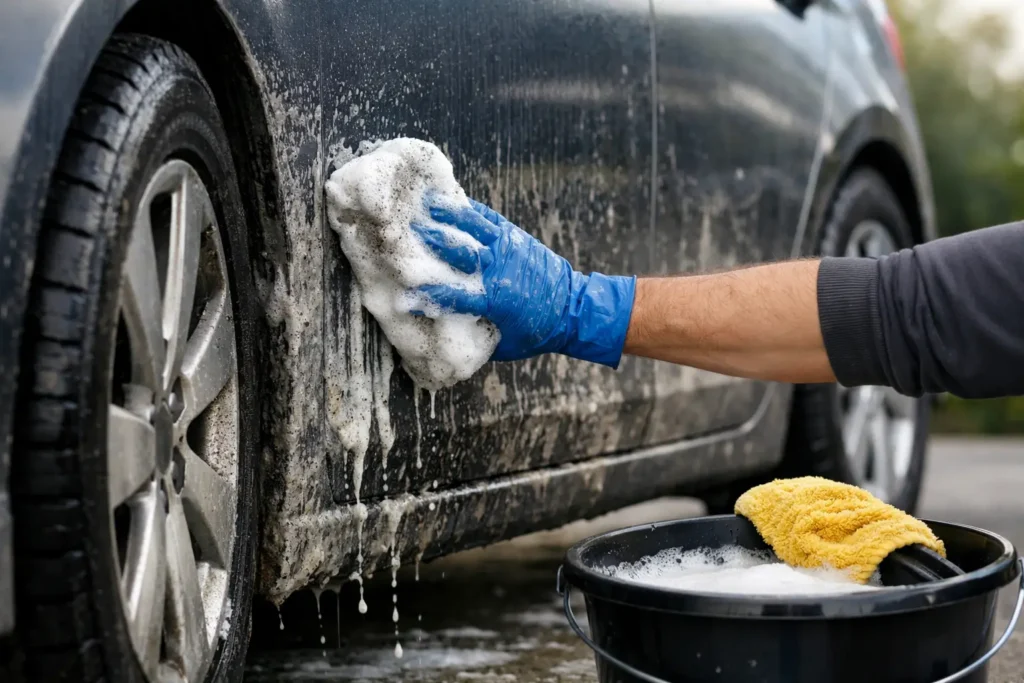
Road grime is not ordinary dust. After a week of Sydney traffic, wet roads and parking outdoors, the film on your lower doors and rear bumper can contain oily residue, brake dust, tar, road salt and fine grit. Knowing how to remove road grime from car surfaces properly matters because rubbing that contamination across dry paint is one of the quickest ways to leave fine wash scratches behind.
The goal is not simply to make the car look cleaner for the afternoon. A careful wash removes the abrasive layer before it can dull your paintwork, stain trim or make your wheels look permanently neglected. With the right order, products and a little patience, your daily driver, family SUV or work vehicle can come up fresh without taking unnecessary risks with the finish.
Why road grime needs a different approach
Road grime builds up most heavily where the car meets the road: behind the wheels, along the sills, on lower doors, around the number plates, and across the rear hatch or boot. Rain makes the problem worse. Water lifts dirt and oily contaminants from the road, then deposits them in a sticky film as it dries on your vehicle.
A quick wipe with a sponge or an old towel may seem efficient, but it drags that grit over the clear coat. Even light pressure can create fine swirling marks that are most visible in direct sun or under service-station lighting. Dark paint, black trim and gloss wheels tend to show the damage first.
The safest method is based on one simple principle: loosen and rinse away as much contamination as possible before touching the paint. That is the difference between a basic clean and premium care that protects the presentation of your car over time.
What you need before you start
You do not need an overloaded detailing shelf, but household detergents and rough cloths are best avoided. Dishwashing liquid can strip protective products and may dry rubber and trim, while a broom-style brush has no place on painted panels.
For a proper home wash, gather these essentials:
- A pH-neutral car wash shampoo
- Two buckets, ideally with grit guards
- A quality microfibre wash mitt and several clean microfibre drying towels
- A hose with a gentle spray setting or pressure washer used at a safe distance
- A dedicated wheel cleaner and soft wheel brush
- Tar remover or a bug-and-tar product for stubborn spots
Work in the shade where possible, and start only when the panels are cool. Cleaning in hot sun causes water and shampoo to dry too quickly, often leaving mineral spots and streaks that can be harder to remove than the grime itself.
How to remove road grime from car paint safely
Start with a thorough pre-rinse
Begin at the roof and work down, rinsing the entire vehicle generously. Pay extra attention to wheel arches, tyres, lower doors, mudflaps, the front bumper and the rear of the car. These are the areas that collect the heaviest abrasive film.
If using a pressure washer, keep a sensible distance from the paint, badges, window seals and stone-chip areas. The purpose is to flush dirt away, not force water into seals or lift damaged paint. A normal hose can still do an excellent job when used patiently.
For a particularly dirty car, apply a quality pre-wash or snow foam according to its directions and allow it to dwell briefly. It should soften grime, not dry onto the vehicle. Rinse it away before moving to the contact wash.
Clean wheels and lower sections first
Wheels often carry brake dust and road residue that you do not want transferred to the paintwork. Work on one wheel at a time, applying a wheel-safe cleaner and agitating gently with dedicated brushes. Rinse thoroughly before the product dries.
Then give the lower panels another rinse. If there are black tar specks or thick oily marks, use a car-safe tar remover on a cool, dry area as directed by the product label. Do not attack them with fingernails, scourers or excessive pressure. Let the cleaner do the work, then wipe gently with a clean microfibre cloth and rinse again.
Use the two-bucket hand-wash method
Fill one bucket with shampoo solution and the other with clean rinse water. Load the microfibre mitt with shampoo, wash a small section with light, straight passes, then rinse the mitt thoroughly before returning it to the shampoo bucket. This helps keep loosened grit out of the wash water.
Wash from the cleanest areas to the dirtiest: roof, glass, bonnet, upper doors and rear panels first. Leave sills, lower doors and bumpers until last. There is no need to scrub. If a mark does not release easily, rinse the area, reapply shampoo or a suitable cleaner, and give it more time.
A separate mitt for the lower bodywork is a sensible upgrade, especially for cars that regularly travel on wet roads, construction-adjacent streets or unsealed driveways. It is a small step that can make a real difference to paint safety.
Rinse completely and dry without dragging
Once every panel has been washed, rinse from top to bottom until no shampoo remains around mirrors, badges, window rubbers or door handles. Leftover product can leave white residue and spoil an otherwise clean finish.
Dry with a large, clean microfibre drying towel, laying it across a panel and gently drawing it over the surface rather than pressing hard. Use a second towel for lower sections, door jambs and wheels. If your towel becomes saturated or picks up grit, swap it out rather than continuing.
Open the doors, fuel flap and boot or hatch carefully to dry trapped water. A few minutes spent on these details prevents drips from running down freshly cleaned panels later.
When road grime will not shift
Some contamination is bonded to the surface rather than sitting on top of it. Tar can feel rough or appear as dark dots near the wheel arches. Tree sap may be raised and sticky. Industrial fallout and brake dust can leave small embedded particles that make paint feel gritty even after washing.
A clay treatment can remove bonded contamination, but it needs lubrication and a gentle hand. Used incorrectly, clay can mar paint, particularly when the car is heavily soiled. Paint decontamination and machine polishing are often best left to a professional when the vehicle has delicate paint, existing scratches or a high-gloss dark finish.
Likewise, orange-brown staining around wheels may not be simple dirt. It can be embedded brake dust or corrosion-related staining. Strong chemicals may improve it, but they can also affect unprotected alloys, polished finishes and damaged clear coats. The right product depends on the wheel material and condition.
Protect the finish after cleaning
A clean surface is easier to keep clean when it has protection on it. Applying a quality spray sealant, wax or ceramic-style maintenance product after washing can improve water beading and make future road grime less likely to cling to the paint. Protection is not a substitute for washing, but it makes routine maintenance quicker and kinder to the finish.
For most daily-driven cars, a careful wash every two to four weeks is a sensible rhythm. It depends on where the vehicle is parked, how often it is driven in rain, whether it travels on motorways, and how quickly brake dust builds up. Cars used for rideshare, client visits or business work may need more frequent attention to stay presentable.
Avoid waiting until the lower panels feel rough and look grey. Regular, gentle maintenance takes less effort than a heavy restoration wash and gives paint, wheels and trim the care they deserve.
When professional hand care is the better choice
There are times when a driveway wash is not practical. Apartment living, water restrictions, time pressure and stubborn contamination can all make professional care worthwhile. It is also the safer option before a sale, special event or business appointment, when the finish needs to look consistently sharp rather than merely acceptable.
A trained hand-wash team can assess the level of road film, use purpose-made products on sensitive surfaces and clean the areas many home washes miss. For vehicle owners around Enfield and Sydney’s inner west, Premium Car Wash provides 100% scratch-free hand car care, from regular maintenance washes to deeper foam cleaning and mini detailing when the vehicle needs a more complete refresh.
The best road-grime routine is the one you can maintain: rinse before contact, use clean tools, work gently and protect the finish afterwards. Your car will not only look better leaving the driveway or wash bay, but will stay easier to care for through every kilometre ahead.