
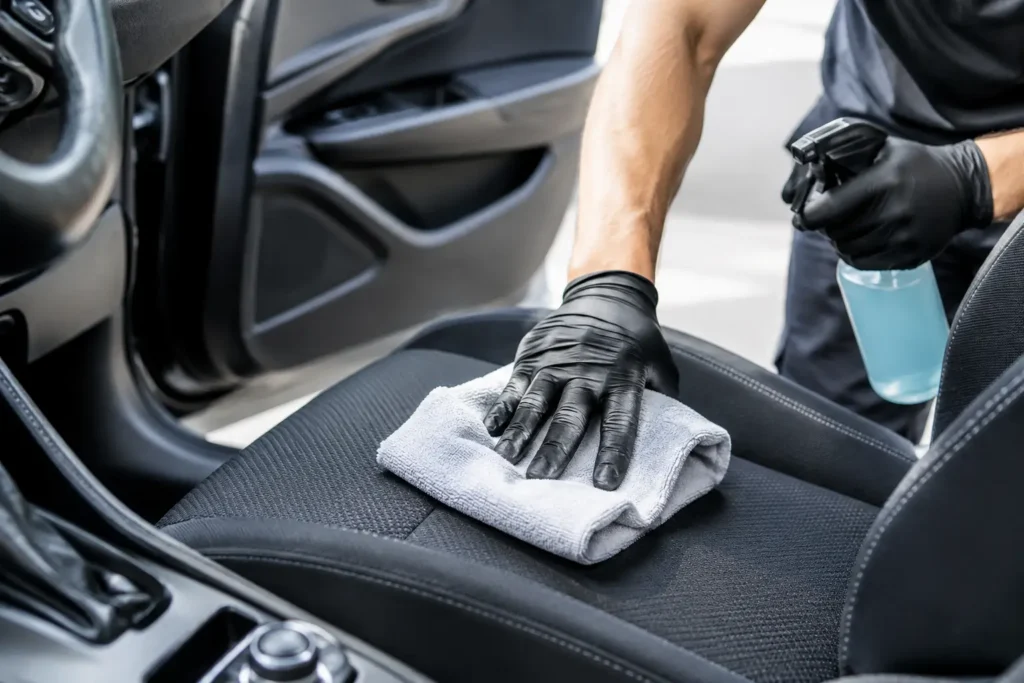
A coffee spill before the morning commute, muddy school shoes on the rear seat, or a takeaway bag that tipped over at the lights can make an otherwise clean car feel neglected. Knowing how to clean car upholstery properly helps protect the look, comfort and resale appeal of your vehicle – without leaving behind tide marks, stiff fabric or an overpowering chemical scent.
The best approach is measured rather than aggressive. Car seats are exposed to heat, UV, body oils and daily wear, so they need the care they deserve. Before reaching for a cleaner, identify the upholstery material and treat the stain early. A small amount of the right product, applied carefully, will usually deliver a better result than soaking the seat.
Start by identifying your upholstery
Most daily drivers, SUVs and commercial vehicles have cloth, leather, synthetic leather or a mix of materials. Cloth seats can generally handle a controlled fabric-cleaning process, while leather and synthetic leather need minimal moisture and a suitable pH-balanced cleaner. Alcantara, suede and perforated leather require extra caution because excess liquid can leave marks or seep beneath the surface.
Check your owner’s manual if you are unsure what your seats are made from. It is also wise to test any cleaner on a small, hidden section near the seat base before using it across a visible area. If the colour transfers to your cloth or the material changes appearance, stop and choose a gentler product.
Avoid household all-purpose sprays, laundry powder and strong degreasers. They can strip protective finishes, leave sticky residue that attracts more dirt, or cause leather to dry and crack in Sydney’s warmer conditions.
What you need to clean car upholstery
For most interior refreshes, use a vacuum with a crevice tool, soft detailing brush, clean microfibre cloths, a fabric or leather cleaner suited to the surface, and a small bucket of clean water. An upholstery brush can help lift dirt from cloth, but it should have soft bristles.
A wet-and-dry vacuum or extraction machine can be useful for heavily soiled fabric seats, particularly in family cars. However, more water is not automatically better. The aim is to lift contamination while keeping the foam beneath the upholstery as dry as possible. Saturated seat foam can take days to dry and may develop an unpleasant smell.
How to clean car upholstery step by step
Clear and vacuum the interior first
Remove floor mats, rubbish, child-seat crumbs and loose items from the cabin. Slide the front seats forward and back to reach the rails and edges, then vacuum the seat faces, seams, bolsters and gaps. Use the crevice tool around buckles and between the rear-seat cushions.
Vacuuming is not a step to rush. Grit trapped in the fabric can turn into muddy residue once cleaner is added. It can also be abrasive when you brush the seat, especially on lighter-coloured upholstery.
Treat stains before cleaning the full seat
Stains respond best when treated according to what caused them. Blot fresh spills with a dry microfibre cloth rather than rubbing them deeper into the fibres. For food, coffee or soft drink stains, use a fabric cleaner sparingly and work from the outside of the stain towards the centre. This helps prevent the mark from spreading.
For grease, sunscreen or makeup, apply a small amount of upholstery cleaner to a microfibre cloth first, then gently dab the affected area. Ink, dye transfer from jeans, pet accidents and vomit can be more difficult. These stains may need a specialised product and can worsen if they are scrubbed hard.
If a spill has soaked through to the seat foam, or if there is a persistent odour, professional interior detailing is often the safer choice. Surface cleaning may improve the appearance but fail to remove what is sitting below the fabric.
Clean cloth seats in small sections
Spray the cleaner onto a brush or microfibre cloth, not directly onto the entire seat. Work one small section at a time, using light circular motions to loosen grime. Pay extra attention to the driver’s seat, armrests, headrests and outer bolsters, where body oils and daily contact build up.
Wipe away the lifted soil with a clean, slightly damp microfibre cloth. Then use a dry towel to absorb remaining moisture. Rinse or replace your cloths as they become dirty – continuing with a grimy cloth simply moves the dirt around.
When cleaning a large stain, it can be better to clean the whole seat panel lightly rather than only the spot. This reduces the risk of a visible ring or water mark once the fabric dries. Do not flood the material, even if the stain is stubborn.
Clean leather and synthetic leather gently
Leather seats need a different technique. Vacuum the seams first, then apply a small amount of dedicated leather cleaner to a soft microfibre cloth or soft brush. Wipe gently across the surface, working into creases and stitching without saturating them.
Follow with a clean, dry cloth to remove residue. If the seat is genuine leather, apply a quality leather conditioner once the surface is clean and dry. Conditioning helps maintain suppleness and reduces the chance of the leather becoming dry or dull over time.
Synthetic leather generally does not need conditioner, and some conditioners can leave it slippery or overly shiny. A clean, natural-looking finish is the goal, not a greasy showroom gloss that makes the seat uncomfortable to use.
Let the cabin dry properly
Leave the doors or windows open in a secure, shaded area after cleaning. Good airflow matters more than direct heat. Harsh sun can dry products too quickly, while closed-up damp seats can create humidity and lingering odours.
If you need to drive sooner, use the vehicle’s air conditioning with fresh-air mode rather than recirculation where possible. Make sure seats are dry before fitting child seats, seat covers or storing items on them.
Common mistakes that leave upholstery looking worse
The most common mistake is over-wetting fabric seats. It may feel as though a heavily soaked seat is getting a deeper clean, but water can carry soil outwards as it dries, creating water marks. Use product in controlled amounts and extract or blot moisture straight away.
Scrubbing too hard is another problem. Stiff brushes and aggressive pressure can roughen fabric, damage delicate fibres and leave the cleaned patch looking different from the rest of the seat. Gentle agitation, repeated if necessary, is more effective than one harsh attempt.
Be cautious with fragranced sprays. They can disguise an odour for a day or two without addressing its source. A musty smell after cleaning usually means the upholstery or underlay has remained damp, while a persistent food or pet odour may require deeper treatment.
Finally, do not forget the areas around the upholstery. Dirty seatbelts, door trims and centre consoles can quickly transfer grime back onto freshly cleaned seats. Wipe these surfaces with a compatible interior cleaner and a separate microfibre cloth.
When professional upholstery cleaning is worth it
At-home cleaning suits light dirt, fresh spills and regular maintenance. Professional care becomes worthwhile when seats have ground-in grime, strong odours, unknown stains, mould concerns, pet contamination or extensive marks across multiple rows. It is also a practical option before selling a vehicle, after buying a used car or when preparing a work vehicle that represents your business.
A professional interior clean has the advantage of purpose-built equipment, premium products and experienced judgement around different materials. The right process can lift embedded dirt while protecting fabric, leather and surrounding trims from excess moisture. For Enfield and inner-west Sydney vehicle owners, Premium Car Wash can provide this level of meticulous interior care as part of a premium clean or mini detail.
Regular vacuuming, prompt spill treatment and a careful seasonal refresh will keep your cabin far more inviting between professional appointments. Treat the upholstery as part of your car’s overall presentation, and every drive will feel that little bit more considered.